
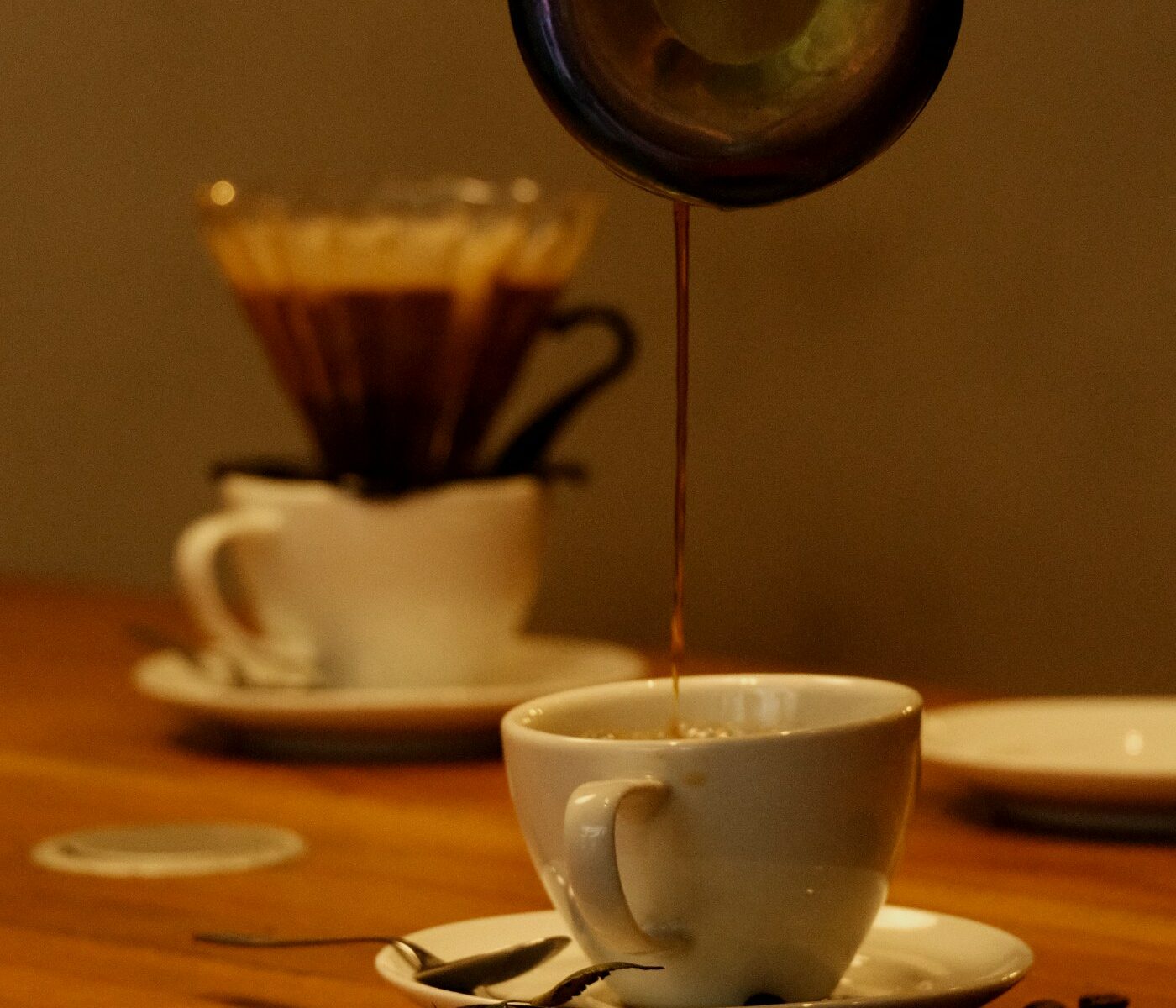
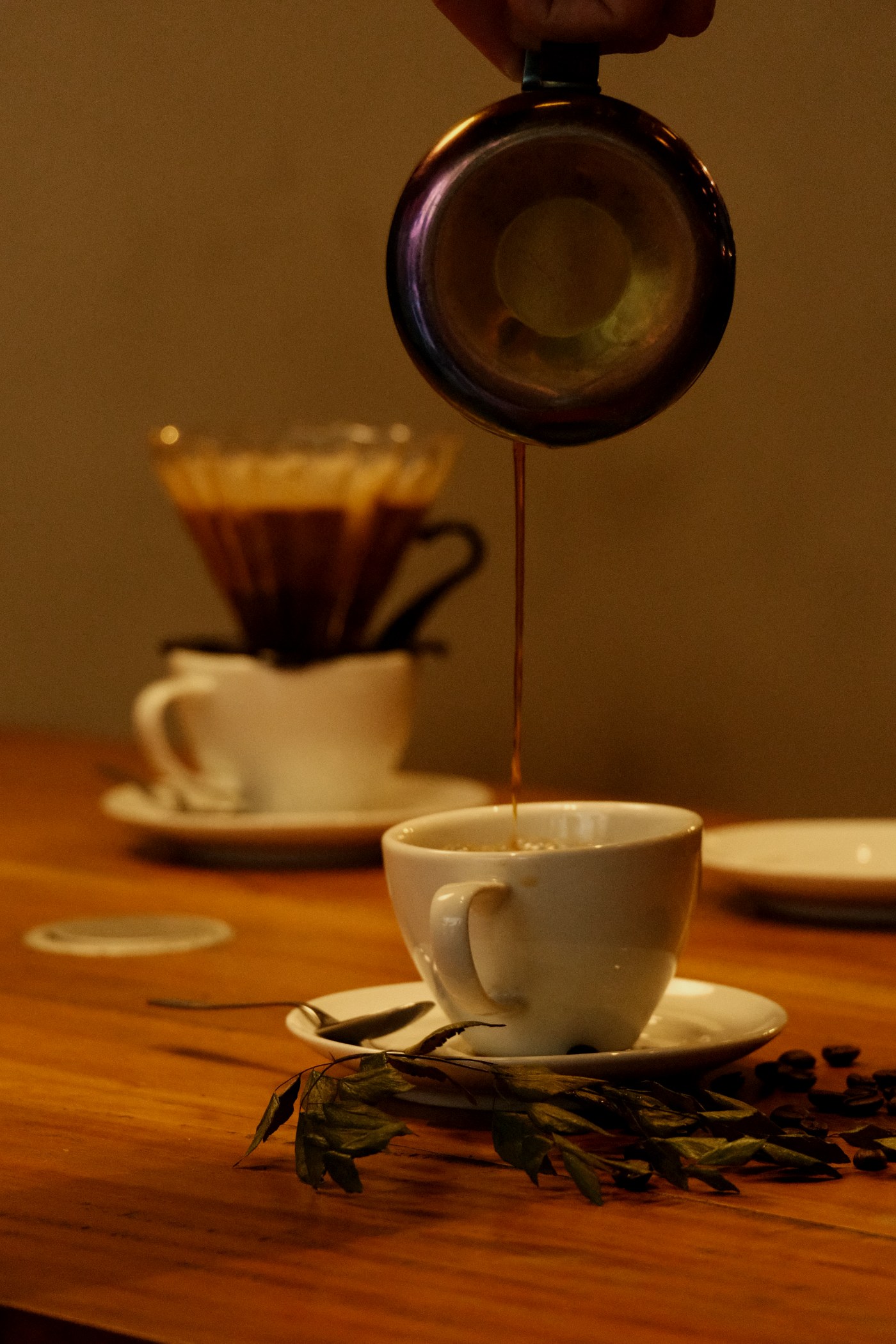
In September, the day often begins with a coffee. A first cup on waking to get going, a second in the afternoon when focus fades: nothing more ordinary at the start of the season. Yet we rarely ask what this daily ritual does to the skin.
Coffee is often wrongly accused of being bad for the health. It is, in fact, one of the greatest sources of antioxidants in our diet, thanks to its polyphenols, chief among them chlorogenic acid. A Japanese study published in the International Journal of Dermatology (Fukushima, 2015) found fewer sun-related pigment spots in the women who drink the most coffee. Other work shows that the polyphenols of the green bean improve skin quality and microcirculation. Drunk without sugar, a good coffee does no harm to the complexion.
The real problem is sugar, and the swing in blood glucose it causes. The mechanism is simple: a sweetened coffee, or the pastry that comes with it, raises blood sugar quickly; the body releases insulin to bring it back down, and it then falls below where it started. Fatigue and cravings follow, then a rise in cortisol and adrenaline to correct course. The skin feels two effects. First, excess sugar binds to collagen and stiffens it: this is glycation, linked to skin ageing by the dermatologist F. William Danby as early as 2010, which dulls the complexion and slackens firmness. Second, cortisol also breaks down collagen, weakens the skin barrier and stimulates the sebaceous glands. Coffee has nothing to do with it; sugar does.
Quality matters too. The antioxidants in coffee are fragile and fade in supermarket coffee, roasted and ground months earlier. A specialty coffee, freshly roasted and ground to order, preserves them. Paris roasters such as Terres de Café or Coutume select traceable, freshly harvested beans. A good coffee, fresh and without sugar, remains a pleasure that benefits the skin.
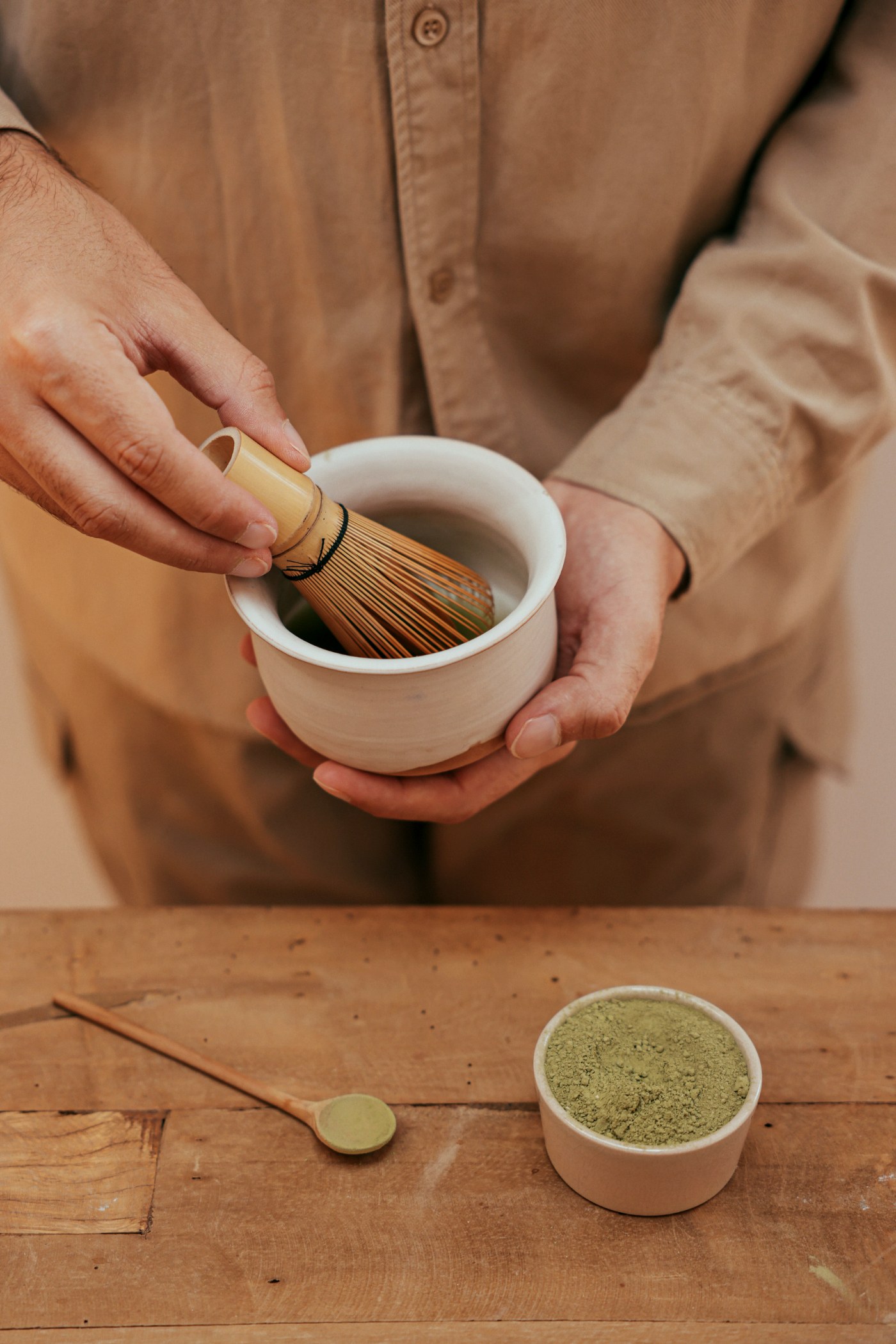
Then there is matcha, held up as the virtuous alternative. It is a Japanese green tea ground to a powder: the leaves, grown in the shade, are stone-milled, then whisked into water and consumed whole. Pure matcha is genuinely worthwhile: alongside caffeine, it provides L-theanine, an amino acid that brings a calm alertness, without jitters or an energy crash, as well as antioxidants. But the matcha latte served in most cafés, or made with already-sweetened powders, is often very high in sugar: the same flaw as coffee. The rule does not change, it is without sugar. You can find a beautiful, ceremonial-grade one at a house like Anatae, in Paris.
Behind coffee and matcha lies a wider trend, that of nootropics, substances meant to sharpen focus. The caffeine and L-theanine pairing is its most sensible version; we are also seeing a rise in adaptogenic plants, ashwagandha foremost, said to temper cortisol. One caution, though: natural does not mean risk-free. In 2024, France's ANSES advised against it for pregnant women and for people with thyroid, liver or heart conditions, and stressed the importance of respecting doses. Many take it with no trouble at all, but an adaptogen should be chosen with discernment, ideally on a doctor's advice.
So the new season does not force a choice between energy and complexion: a good coffee or a real matcha, without sugar, wake you up at no cost. But the season's fatigue is not only in the cup: the light dims, the pace quickens, and it ends up settling on the face, in drawn features and a dull complexion. That is where massage takes over, when no drink is enough: it revives microcirculation and drainage, relaxes the features and brings back radiance. That is the very purpose of a Récupération treatment or a Parenthèse.