


Energy and skin: recharge from within

Fruits et legumes d'automne jaunes et oranges autour d'un cadre dore, energie et eclat de la peau

You have probably noticed it: every autumn, the face changes before we do. The complexion dulls, shadows settle under the eyes, energy runs out faster, and we reach for coffee to make up for the fading light. What if, this year, we took the problem the other way round? It all plays out well before the morning cream, on the plate first, then with two or three well-chosen reinforcements.

It starts on your plate

Autumn, thankfully, has everything we need. A roasted squash, a beetroot, grilled sardines, the first clementine perfuming the kitchen: what the season brings to the table is also good for the skin. I have a soft spot for oily fish (sardine, mackerel, herring): twice a week, their omega-3s (EPA and DHA) slip into our cells and calm the low-grade inflammation that dulls the complexion. Brightly coloured vegetables (squash, beetroot, sweet potato, cabbage) are treasure troves of antioxidants, and the beta-carotene in squash turns into vitamin A, the one that helps skin renew itself. The first citrus fruits give us back vitamin C, without which collagen simply cannot be made. And then there are the fruits we cook with less often. Persimmon, melting when fully ripe, is likewise rich in beta-carotene and vitamin C. Pomegranate, scattered over a salad or a bowl of yoghurt, concentrates rare polyphenols, the punicalagins, among the most studied antioxidants for protecting cells. Add grapes and the last figs, sweet and rich in antioxidants, and the autumn fruit bowl becomes a true beauty ally. Nothing complicated: the more colour on the plate, the better.

A word about freshness, because it truly matters. Vitamin C, the most fragile, vanishes within days. As a result, a seasonal vegetable bought at the market, picked nearby, often keeps more of it than an organic one ripened in cold storage before crossing the planet. I am fond of organic, fewer pesticides, better-treated soil, but it says nothing about the distance travelled. Between an organic apple from the other side of the world and an apple from the orchard next door picked the day before, I choose the latter, for the skin as much as for the taste.

The right support

When the light drops, the plate is not always enough. Micronutrition starts from a simple idea: rather than taking a bit of everything, you target what is really missing, ideally identified by a blood test. First in line is vitamin D. At our latitudes, the winter sun is too low for the skin to produce it: the Esteban study by Santé publique France found that nearly 80% of adults are deficient, even more so in winter. Yet it does far more than protect the bones, it plays on immunity and mood. A blood test, a little vitamin D3, and the deficiency is corrected within a few weeks.

Magnesium is burned through under stress, precisely when we need it most; what doctors know is that a bisglycinate or a citrate is absorbed far better than the oxide. Zinc, for its part, regulates sebum and supports immunity. Omega-3 capsules are worth taking mainly for their EPA and DHA, the ones that count, all the more so as our modern diet, saturated with omega-6, tends to drown them out (Simopoulos’ work made this clear). And iron, in many women: low ferritin, which you only see if you ask for it, is enough to explain lingering fatigue, a grey complexion, hair that falls. As for brands, the ones doctors prescribe, such as PiLeJe or Nutergia, are safe bets.

And then, the hands

Nourishing from within already changes a great deal, but one link is missing, and it is my favourite: the hands. Seasonal fatigue always ends up showing on the face, the complexion veils over, features set, the gaze grows heavy. Where no capsule acts from the outside, massage wakes up the microcirculation that carries oxygen and nutrients to the surface, revives the drainage that de-puffs, releases the tensions that harden the features. Nourish within, awaken without: it is this pairing that best prepares the skin for the cold season. And that is, quite precisely, what we do together in the treatment room.


Book your Rituel sur mesure (1h30), for him or for her.

Eternity, the new obsession

Cryonics tanks preserving bodies at -196°C in liquid nitrogen
Cryonics, the embalming of the 21st century: preserving bodies at -196°C in liquid nitrogen, in the hope of a future awakening.

A fortnight ago, we left Egypt and its quest for an eternity in the afterlife. Our own age wants eternity here below: no longer preserving a body for the great journey, but holding on to youth for as long as possible. We barely even say anti-ageing any more. We say longevity, and the word has made its way into our very creams.

Skin longevity, the new watchword

The shift is not merely a matter of vocabulary. Anti-ageing corrected the signs, the wrinkle, the spot; longevity claims to tackle skin ageing itself, deep inside the cell. Biologists have described twelve hallmarks of ageing, popularised by Carlos López-Otín. Among them is cellular senescence: those “zombie” cells that stop renewing themselves and give off a dull, smouldering inflammation, slowly undermining the collagen and the radiance of the skin.

From the bottle to the freezer

A few names are emerging. The house of OneSkin, founded by scientists, presents itself not as a skincare brand but as a skin-longevity company, built around a peptide, OS-01: a study published in npj Aging (Zonari, 2023) showed, on human skin models, a halving of senescent cells and a revival of collagen. In luxury, Augustinus Bader, born of stem-cell research, has made regeneration its entire signature. Around them orbit spermidine and NAD, those longevity molecules everyone talks about, yet whose evidence comes mostly from yeast, worms, mice, or swallowed capsules, rarely from a cream.

And the quest does not stop at the bottle. It has become a billion-dollar industry. At Alcor, in Arizona, the blood of the deceased is replaced with a protective solution and the body is cooled to -196 degrees in liquid nitrogen, in the hope that the future will know how to revive it: cryonics, that embalming of the 21st century the Egyptians would not have disowned. Further still, laboratories such as Altos Labs, funded to the tune of three billion dollars by some of the greatest fortunes on the planet, are seeking to reprogramme our cells to reverse age; elsewhere, organs are already being printed in three dimensions. The pharaohs’ old dream has put on the clothes of Silicon Valley.

Eternity is not a bottle

So should we expect everything from a molecule, a freezer or a billionaire? No. The true longevity of the face rests first on gestures no technology can replace: restorative sleep, a living diet, sun protection kept up over time, skin that is not mistreated. The rest is regularity, that quiet discipline which, month after month, sustains the microcirculation, supports the production of collagen and elastin, and genuinely slows ageing. Egypt understood it before anyone else: eternity is not an object you possess, it is a treatment you repeat.

In the treatment room, I do not sell eternity in a bottle, still less in liquid nitrogen. I awaken the microcirculation through massage and drainage, I revive the exchanges, I help the skin do what it does best, regenerate. And because longevity is a matter of regularity, it is the repeated appointments that write the real difference. For him, Récupération. For her, La Parenthèse.

What your coffee does to your skin

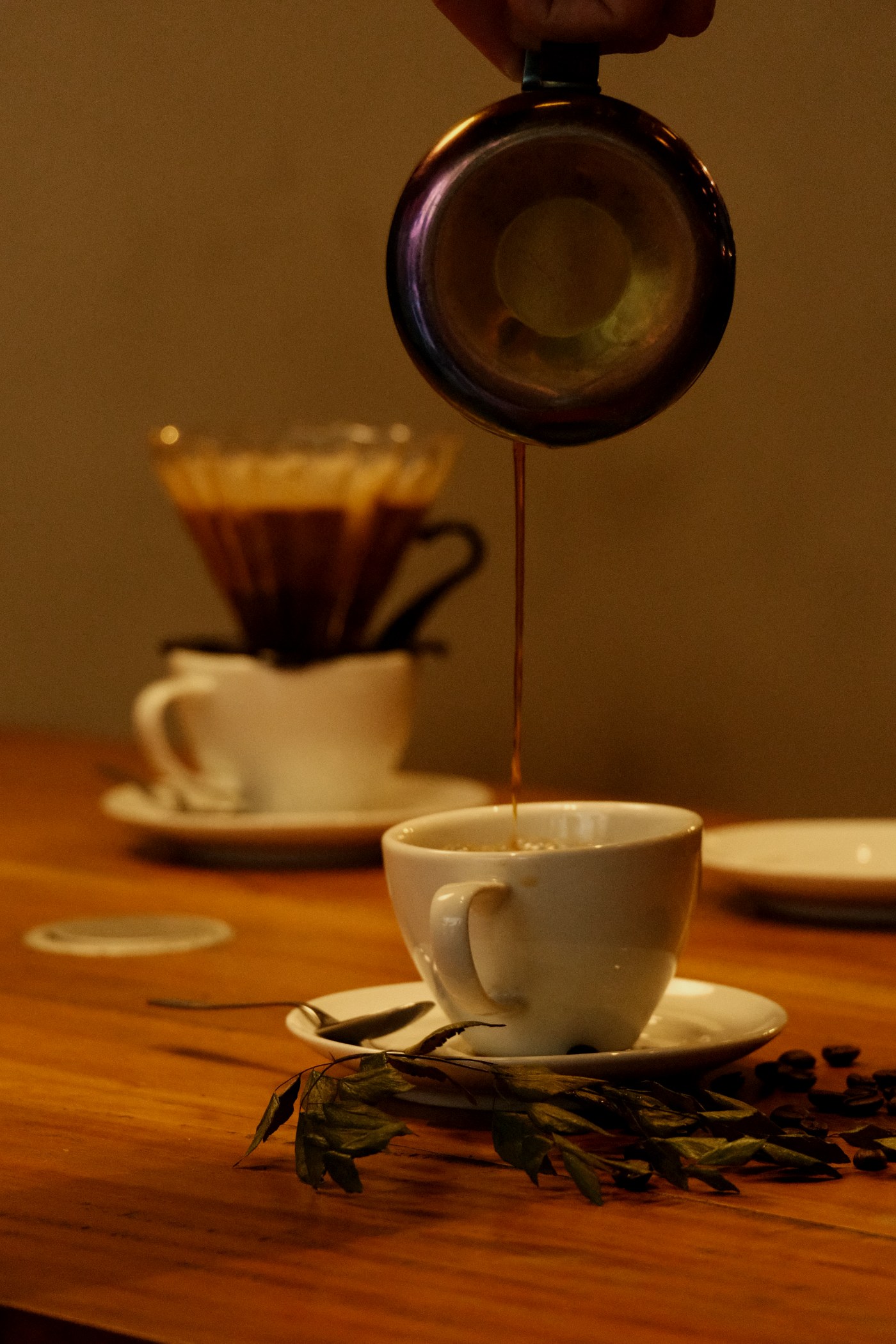
Un cafe verse dans une tasse, ambiance chaude et intime

In September, the day often begins with a coffee. A first cup on waking to get going, a second in the afternoon when focus fades: nothing more ordinary at the start of the season. Yet we rarely ask what this daily ritual does to the skin.

Coffee is often wrongly accused of being bad for the health. It is, in fact, one of the greatest sources of antioxidants in our diet, thanks to its polyphenols, chief among them chlorogenic acid. A Japanese study published in the International Journal of Dermatology (Fukushima, 2015) found fewer sun-related pigment spots in the women who drink the most coffee. Other work shows that the polyphenols of the green bean improve skin quality and microcirculation. Drunk without sugar, a good coffee does no harm to the complexion.

The real problem is sugar, and the swing in blood glucose it causes. The mechanism is simple: a sweetened coffee, or the pastry that comes with it, raises blood sugar quickly; the body releases insulin to bring it back down, and it then falls below where it started. Fatigue and cravings follow, then a rise in cortisol and adrenaline to correct course. The skin feels two effects. First, excess sugar binds to collagen and stiffens it: this is glycation, linked to skin ageing by the dermatologist F. William Danby as early as 2010, which dulls the complexion and slackens firmness. Second, cortisol also breaks down collagen, weakens the skin barrier and stimulates the sebaceous glands. Coffee has nothing to do with it; sugar does.

Quality matters too. The antioxidants in coffee are fragile and fade in supermarket coffee, roasted and ground months earlier. A specialty coffee, freshly roasted and ground to order, preserves them. Paris roasters such as Terres de Café or Coutume select traceable, freshly harvested beans. A good coffee, fresh and without sugar, remains a pleasure that benefits the skin.

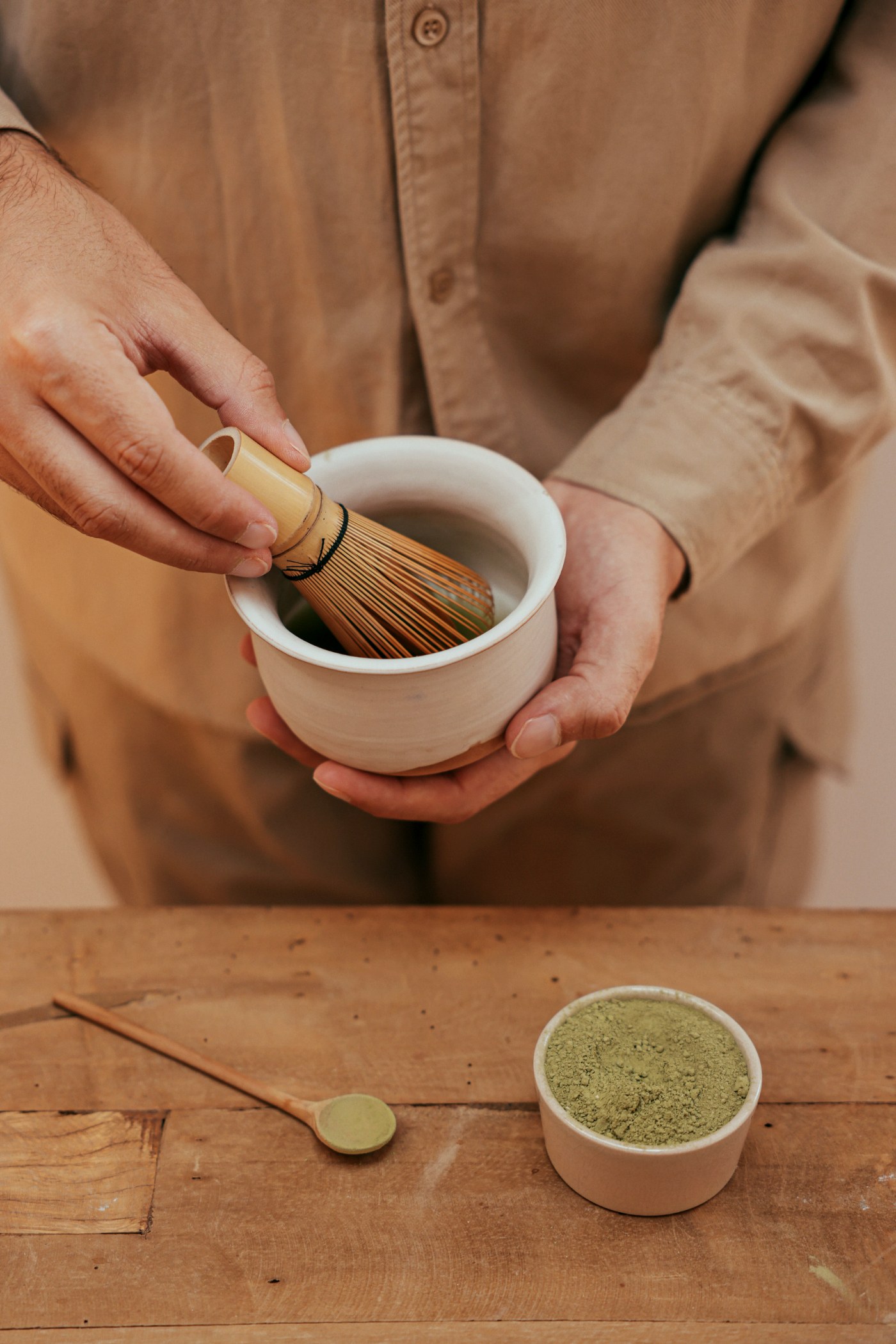
Then there is matcha, held up as the virtuous alternative. It is a Japanese green tea ground to a powder: the leaves, grown in the shade, are stone-milled, then whisked into water and consumed whole. Pure matcha is genuinely worthwhile: alongside caffeine, it provides L-theanine, an amino acid that brings a calm alertness, without jitters or an energy crash, as well as antioxidants. But the matcha latte served in most cafés, or made with already-sweetened powders, is often very high in sugar: the same flaw as coffee. The rule does not change, it is without sugar. You can find a beautiful, ceremonial-grade one at a house like Anatae, in Paris.

Behind coffee and matcha lies a wider trend, that of nootropics, substances meant to sharpen focus. The caffeine and L-theanine pairing is its most sensible version; we are also seeing a rise in adaptogenic plants, ashwagandha foremost, said to temper cortisol. One caution, though: natural does not mean risk-free. In 2024, France's ANSES advised against it for pregnant women and for people with thyroid, liver or heart conditions, and stressed the importance of respecting doses. Many take it with no trouble at all, but an adaptogen should be chosen with discernment, ideally on a doctor's advice.

So the new season does not force a choice between energy and complexion: a good coffee or a real matcha, without sugar, wake you up at no cost. But the season's fatigue is not only in the cup: the light dims, the pace quickens, and it ends up settling on the face, in drawn features and a dull complexion. That is where massage takes over, when no drink is enough: it revives microcirculation and drainage, relaxes the features and brings back radiance. That is the very purpose of a Récupération treatment or a Parenthèse.

Book your ritual.

Beyond the mask: in praise of the hand

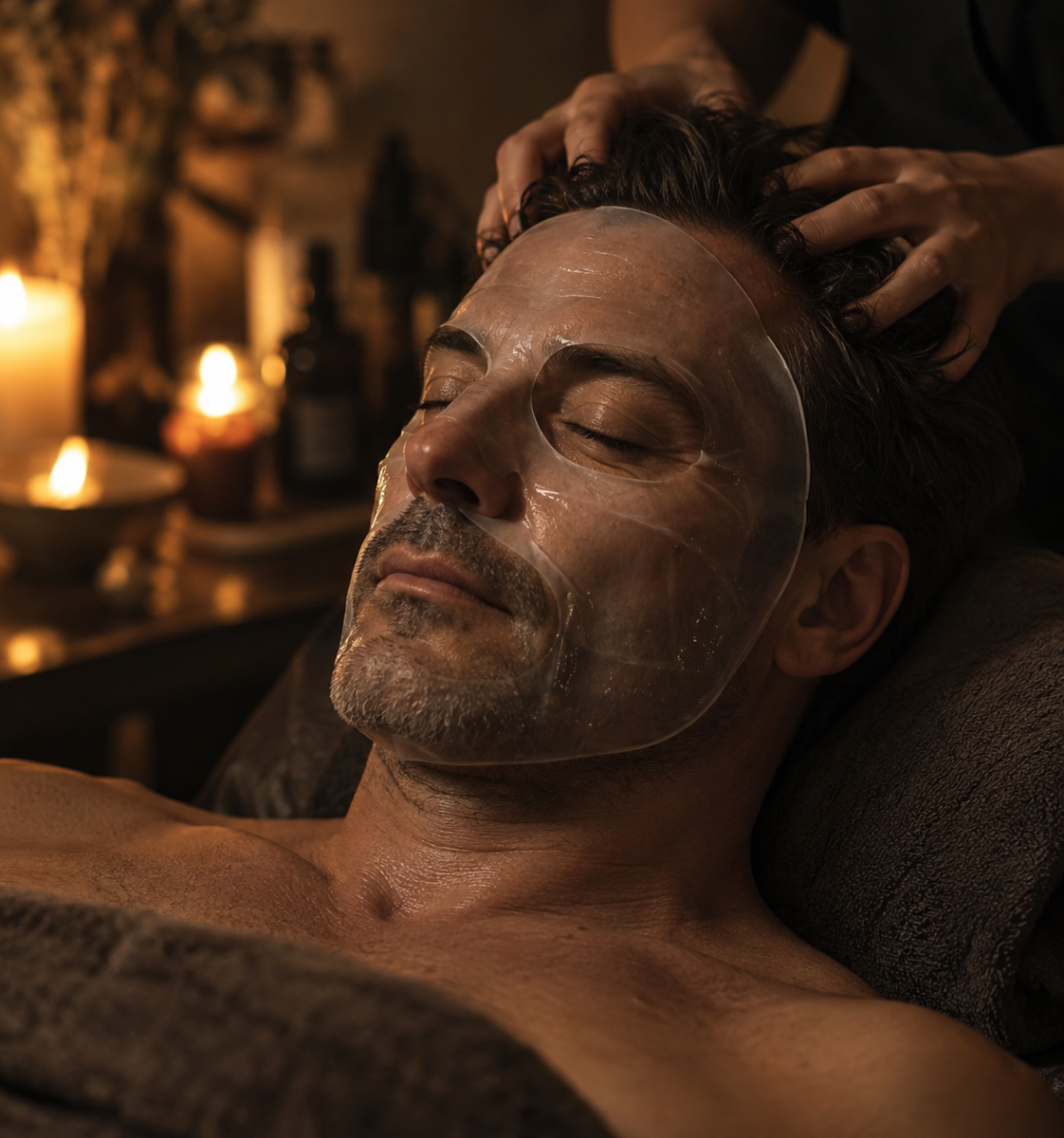
A man receiving a facial treatment, a translucent hydrogel mask on his skin, while hands massage his scalp in soft, warm light

Autumn announces itself, taking up residence as early as September 21, and the skin senses it before the calendar does: the sun withdraws, the air turns dry, the heating resumes its rights and the pace quickens, until that morning when the face feels tight and the complexion has lost its light. The temptation would be to strip everything away and start from scratch; that is precisely where we go wrong. Skin worn by the season does not ask to be scoured, but to be nourished and protected. On this ground, two gestures are worth more than a shelf of bottles: the mask, and the hand.

The mask, and the serum it seals in

Of all the masks, only one truly works in depth: the occlusive one, the one that seals. The gesture is soon told. First you lay down a serum, concentrated and chosen for what the skin needs that evening, then you seal it beneath a reusable silicone mask. Silicone, on its own, brings nothing; but the airtight film it forms hydrates the stratum corneum and carries the active deeper still, occlusion increasing the penetration of many active ingredients, as science has established.1 A quarter of an hour, and the serum gives its full measure, where, applied alone, it delivered only a part. Fine ones can be found at Typology or The Ordinary, and, for men, at Horace or Bulldog. Clay, for its part, pursues the opposite design, absorbing sebum and drying to unclog oily skin, so that a rich serum slipped beneath it would make no sense.

Yet the mask, precious as it is, signs only a glow, real but fleeting: truly rebuilding the barrier takes weeks of regular care, not the span of an evening. We devoted a whole Carnet to it at the end of summer.

The plate, too, changes with the season

Radiance is also nourished from within, and the autumn plate bears little resemblance to the summer one. We set aside raw vegetables and water-heavy fruit for a denser, more colourful table: squash and sweet potato, whose beta-carotene warms the complexion, beetroot, the last figs and grapes brimming with antioxidants, walnuts and their good fats. Nothing compulsory, but skin nourished from within weathers the turn of the seasons better.

The hand that doubles the mask

The mask, through its occlusive film, does carry the actives in; but it does not revive circulation, does not drain, unknots no muscle. That is where the hand takes over, and it is my craft. Under its pressure, the face awakens: the vessels release nitric oxide, dilate, blood flows in, bearing oxygen and nutrients, and the complexion revives within the hour. The same gesture rouses the lymphatic drainage, that pumpless network that moves only at the fingers urging, and lightens features the new season had weighed down. It finally loosens those muscles that stress locks without our knowing, the jaw, the temples, the brow. A recent clinical trial even measured it: in women devoted to gua sha, regular massage redrew the contour of the face and eased muscle tone.2 The division is limpid: at home, one nourishes and covers; in the treatment room, I massage, I drain, I release, for a full hour. Far from replacing one another, the two gestures answer each other. Book the Récupération for men, or La Parenthèse for women, and leave to the hand what no mask will ever do.

1 Zhai H, Maibach HI, Effects of Skin Occlusion on Percutaneous Absorption: An Overview, Skin Pharmacology and Applied Skin Physiology, 2001.
2 Ahn et al., Comparative Effects of Facial Roller and Gua Sha Massage on Facial Contour, Muscle Tone, and Skin Elasticity: Randomized Controlled Trial, Journal of Cosmetic Dermatology, 2025.

Eternity, the oldest obsession

Anubis preparing the pharaoh for the afterlife, an ancient Egyptian rite
Anubis watches over the pharaoh and performs the sacred rite of preparing him for the afterlife.

Long before our creams and our promises of youth, an entire civilisation had turned the conquest of time into a matter of state. Ancient Egyptian beauty was never mere vanity: Egypt did not simply dream of eternity, it organised it, ritualised it, perfumed it. And part of that knowledge has never quite left the way we care for our skin.

Preserving for the afterlife

For the Egyptians, death was not an end but a passage, and the body had to remain intact for the soul to continue its journey. Thus was born embalming, that patient art of preserving the flesh against oblivion, which the Greek historian Herodotus described in detail as far back as Antiquity. The aim was never to stay young on earth: it was to prepare an eternity elsewhere, in the beyond. Isis watched over them, she whose outspread wings breathed life back into the departed, while the Ankh, the key of life, promised that nothing ever truly faded.

The ingredients of immortality

What is striking is that the substances of eternity were also those of the beauty of the living. Natron, the mineral salt that dried and purified the body, also cleansed the skin. Myrrh and frankincense, the precious resins burned in the temples, soothed inflammation and closed wounds, a reputation modern science has not disproved. Moringa oil, in which these resins were left to infuse, nourished the face as much as it accompanied the rites. And these gestures have never entirely disappeared. In Egypt itself, Nefertari has spent a quarter of a century crafting entirely handmade skincare with frankincense and myrrh, the very essences that once adorned the dressing table of the queen whose name the house bears. Elsewhere, the method itself lives on: at All Moringa, frankincense resin infuses for thirty days in cold-pressed moringa oil, exactly as it did on the banks of the Nile; Ellie Bianca blends frankincense and myrrh in its facial oils. The skin of the living now receives what was once reserved for eternity.

Eternity changes shores

The obsession itself has never faded. It has merely changed shores: where Egypt prepared the eternity of the afterlife, our own age tries to hold on to it here below, in skin that ages more slowly, in that very contemporary quest we call longevity. That is the story we will tell you in a fortnight. For Egypt understood something before anyone else: caring for your face has never been a trivial act. It has always been a way of holding a conversation with time.

In the treatment room, I bring that conversation to life. I awaken the microcirculation through massage and drainage: blood flows in, the tissues take in oxygen, and the fibroblasts, the cells that produce collagen and elastin, are given what they need to work again. Preserving, here, does not mean freezing time, it means regenerating. For him, Le Protocole Signature. For her, le Rituel sur mesure.

Back-to-work tension: what stress imprints on the face

Tense man in black and white, hands on his head, stress marking the face

The return to routine sounds like a call to order. The pace picks up, the days fill, the nights grow shorter, and the body absorbs it all in silence. The face, though, keeps the ledger. Long before the set wrinkle, there is tension. Let us see how stress works, from the bone to the surface, and how to answer it.

Stress sculpts the face

Under pressure, the body releases cortisol. In the short term it is precious: it wakes us, mobilises energy, sharpens attention, sustains drive. It is when it settles in over time that it turns against us, and the face bears the trace, from the framework to the skin.

The bone first, because it is the foundation. We forget it, but a face rests on a bony architecture, and that architecture moves too. Over the years the facial skeleton resorbs: the orbits widen and the gaze hollows, the maxilla recedes, the jaw loses height while its angle opens. The cavities deepen, and everything covering them, muscle, fat, skin, finds itself less supported. Chronic stress does not help, for cortisol, in high doses and over time, slows bone formation.

The muscles next. Stress freezes expressions: we frown, we clench, we squint. Yet an expression line is born of repetition. With each contraction the muscle folds the skin in the same place; as long as the dermis is young and elastic, the fold fades; past the late twenties, collagen and elastin grow scarce, the skin no longer springs back, and the crease sets, visible even at rest. This is how the frown line forms, between the eyebrows. The jaw, for its part, often clenches without our knowing: the masseter tightens, sometimes thickens, and becomes a stubborn seat of tension. With age the lower face does not harden, it sags: the oval loosens, the jawline blurs.

The dermis, closer to the surface. Fibroblasts produce less collagen, elastin fragments, the supporting tissue thins. Stress adds its share through a quiet mechanism: cortisol raises blood sugar, and this excess sugar binds to the collagen fibres. This is glycation, which stiffens the fibres, makes them brittle, hardens the skin and dulls the complexion. More stress, more available sugar, more glycation.

Circulation, finally. With age and stress, microcirculation slows: blood supplies the skin less well, oxygen and nutrients arrive in a trickle, waste clears poorly. The complexion turns grey, dull, tired.

A word on collagen supplements, since the question comes up often. Recent studies show a modest but real benefit of hydrolysed collagen peptides on hydration and elasticity. It is no magic wand, but if you want to try, look for clinically studied collagen peptides, of low molecular weight, from 2.5 g a day, with vitamin C. The quality marker is the Peptan peptide. Two safe choices: Collaregen (hydrolysed collagen, with vitamin C) or Greenwhey (marine Peptan hydrolysed to 2000 daltons, hence well absorbed). As a support to good sleep and well-treated skin, never as a replacement.

Sleep, the treatment we neglect

The night is not a pause, it is a workshop. It is in deep sleep that the skin repairs itself: cells renew, collagen is synthesised, cortisol finally recedes. Cut the night short and the whole mechanism derails: cortisol that stays high, aborted repair, a leaden complexion, hollowed dark circles, features puffy on waking. Science has measured it. In a landmark study1, faces photographed after sleep deprivation were judged, blind, more tired, less healthy and less attractive than the same faces rested. "Beauty sleep" is not an old wives' tale: it is a measured fact. Sleep remains the first treatment, and the only free one.

The tension we do not feel

Here is the paradox of the face. A knotted shoulder, a stiff back, a heavy leg: the body warns, the pain rises, we know where it hurts. The face, though, stays silent. We do not know that the jaw is locked, that the temples are hard, that the brow never quite lets go, until a hand reveals it. It is often during the treatment, and even more after, that the truth surfaces: "I did not know I was so tense". And this tension is sometimes so deeply set that it resists, that it rises again under the fingers, so far has it lodged.

In the treatment room, I go where the fingers stop. Through cranial massage and intra-oral work, I loosen the jaw from within, I calm the nervous system, I release what stress has knotted in the skull, the neck, around the eyes. You leave with the face relaxed, open, rested, often surprised to have carried so much tension without even noticing. Book Récupération for men, or La Parenthèse for women, and give your face the release it dares not ask for.

1. Axelsson J. et al., "Beauty sleep: experimental study on the perceived health and attractiveness of sleep-deprived people", British Medical Journal, 2010.

Autumn shedding: the scalp, that skin we forget

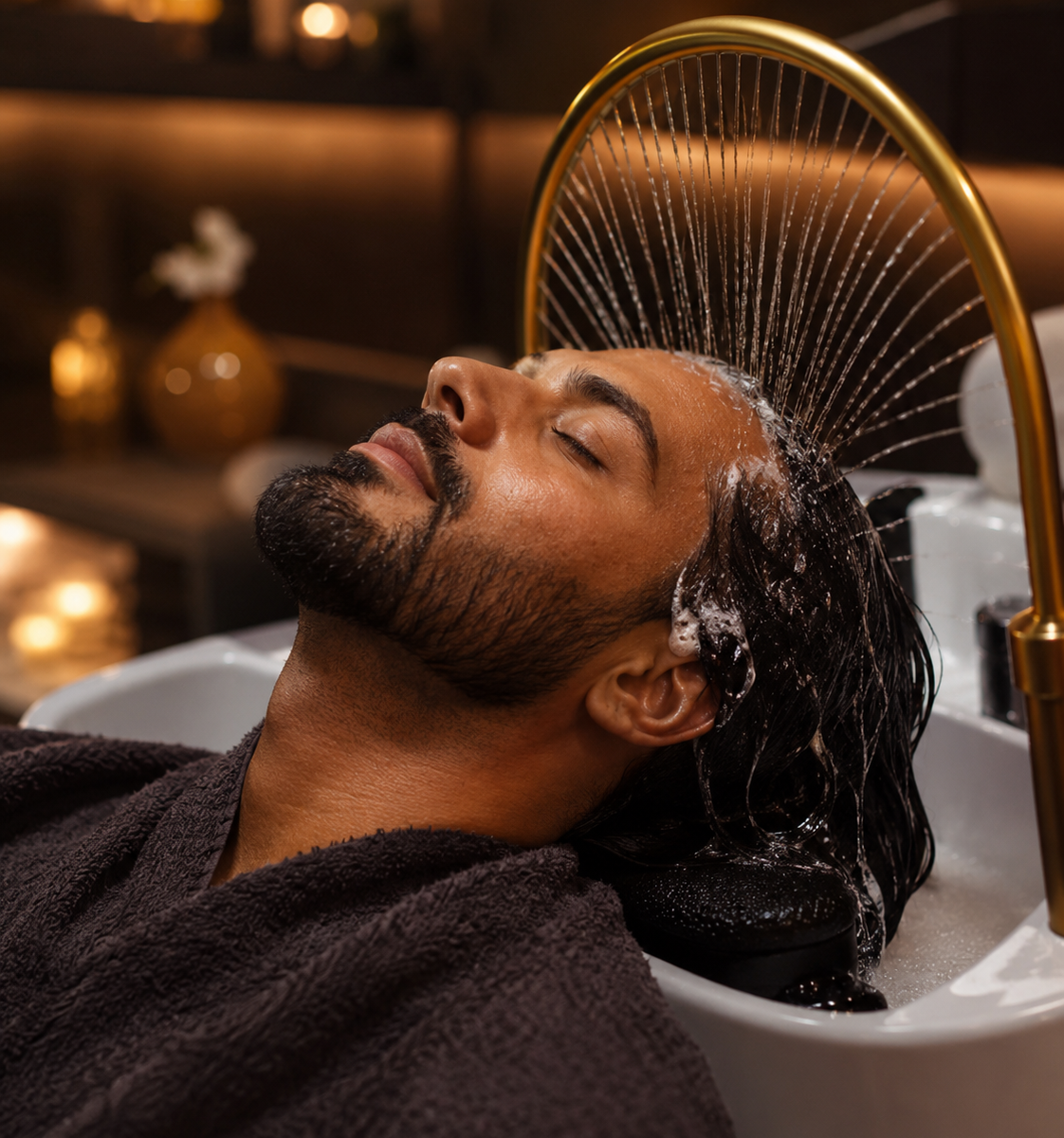
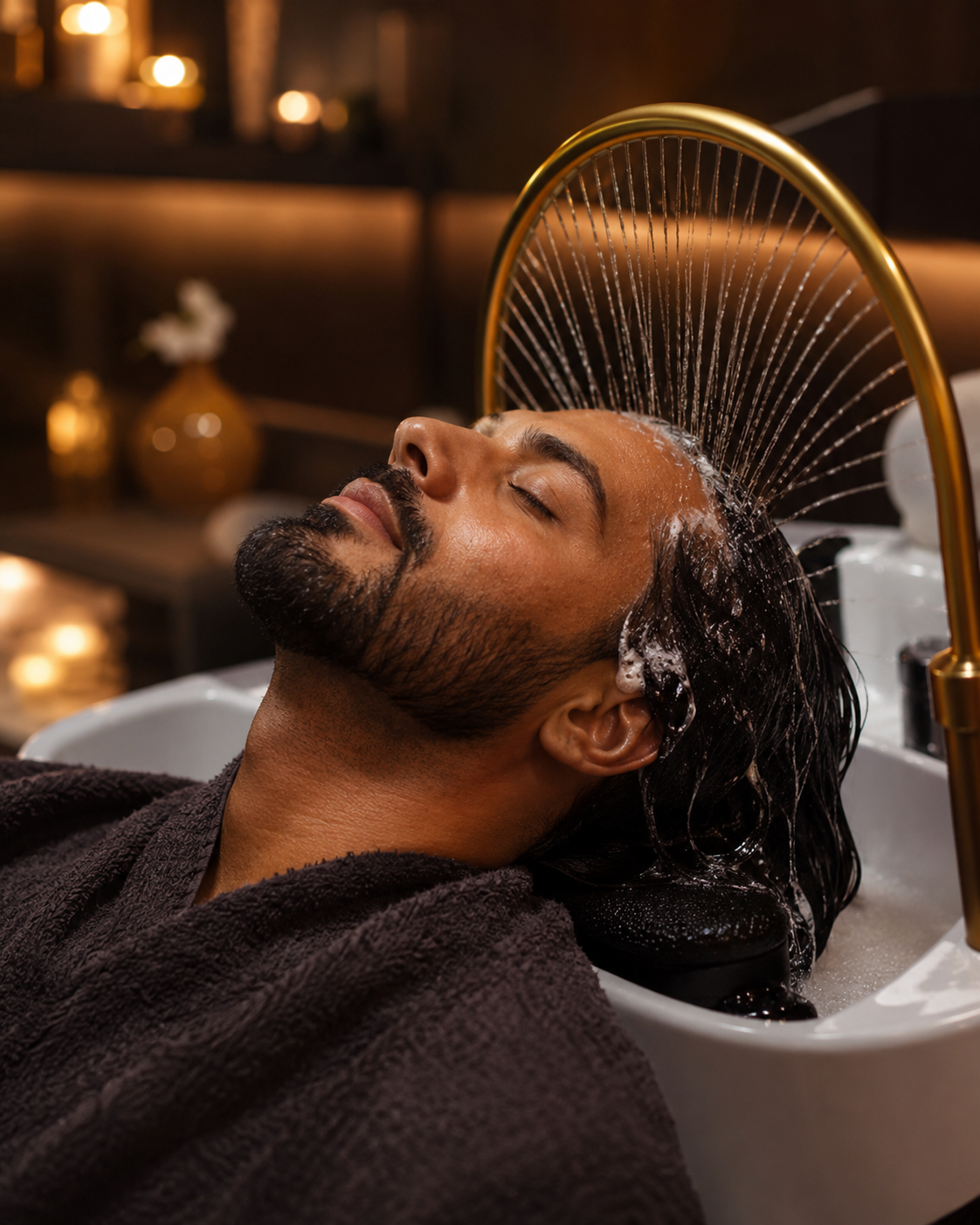
Un homme reçoit un soin du cuir chevelu sous une cascade d'eau, dans l'ambiance feutrée d'un head spa
A man receives a scalp treatment under a cascade of water, in the hushed atmosphere of a head spa

Every autumn, the same scene. You run a hand through your hair and find strands on the pillow, in the shower, on your collar. The little voice starts up: this is it, I'm going bald. Breathe. In the vast majority of cases, it's normal and temporary. What matters is telling a real warning from a false alarm, and looking where no one looks: this skin, beneath the hair.

Autumn shedding: understand it before you panic

Your hair lives by a cycle in three acts: growth (anagen), two to six years and 85% of your head of hair; a short transition (catagen); then rest (telogen), at the end of which the hair falls and makes way for a new one. Hence the figure: losing 50 to 100 hairs a day is normal. These aren't lost hairs, they are replaced hairs.

Seasonal autumn shedding is real and documented. At the end of summer, under the effect of the photoperiod (the change in day length), more hairs shift into telogen, and the shedding appears a few weeks later. This is seasonal telogen effluvium: diffuse, benign, temporary, it clears up in two to six months. Spectacular, sometimes worrying, but not a disease.

Still, you have to tell them apart. Telogen effluvium can also be triggered by significant stress, an iron deficiency, a restrictive diet or an illness: there, you need to find the cause. And then there is androgenetic alopecia, the one that worries men most: the temples receding, the crown thinning, under the effect of a genetically programmed sensitivity of the follicle to dihydrotestosterone (DHT). With each cycle, the follicle miniaturizes: the hair grows back finer, shorter, until it no longer grows back. That one does not clear up on its own.

When to see a specialist, a dermatologist or an aesthetic physician, without delay: shedding that lasts more than three months, localized thinning at the temples or the crown, a scalp that turns red or itches, or sudden, massive loss. In these cases, it is no longer the season talking.

The scalp is cared for like a face

We nearly all forget it: the scalp is skin in its own right. The same skin barrier as the face, with its own particularities: more sebaceous glands, and a microbiome all its own. It is stretched by the galea, in direct continuity with the muscles of the face. To neglect this skin is to neglect the root, where the follicle is born.

Scalp massage, designed for the hair, follows a precise logic. It boosts microcirculation, and with it the supply of oxygen and nutrients to the bulb, while the mechanical stretching of the tissues is thought to stimulate the cells that drive hair growth. Under the hand, it comes down to this: the neck lets go, the temples release, the scalp becomes mobile again instead of clinging to the bone. A small Japanese study (Koyama, 2016, 9 participants), four minutes a day for 24 weeks, measured thicker hair. The effect is real but modest: a matter of consistency.

This is the whole point of scalp skinification: bringing to the crown the rigor of facial care. Gentle exfoliation, serums, targeted actives. This ritual even has a name, the head spa, born in Japan, and a reference in Paris, Flora Lab, whose signature says it all: "molecular skin therapy for hair." We no longer treat hair by its length: we care for the ground it grows from, and it deserves the same hands as the face.

The ladder of solutions, from serum to transplant

Here are the options, from the gentlest to the most radical. For each, what is proven, and what still belongs to hope.

  • Care, serum and scalp massage: the first step, the one you can keep up daily. Actives to know: caffeine, copper peptides (GHK), and rosemary oil, which one study (Panahi, 2015) found comparable to 2% minoxidil over six months (5% minoxidil remains superior). A serum like those from Aroma-Zone brings these actives together. What matters isn't the bottle, it's the consistency of the gesture.
  • Hair mesotherapy: micro-injections of vitamins and trace elements into the scalp, at the doctor's. A popular approach, but limited evidence: to be seen as a boost, not a foundational treatment.
  • Intramuscular injections, the vitamin cure: Bépanthène (dexpanthenol, provitamin B5) and keratin intramuscularly, given by a nurse. A supply of cofactors, a gentle approach, with no clinical evidence to date, but no aggressiveness either.
  • The medical references: on medical advice, minoxidil (topical) and finasteride (oral) are the two foundational treatments genuinely proven against androgenetic alopecia. Finasteride, by prescription, is not indicated for women of childbearing age. PRP, platelet-rich plasma, is gaining ground, with evidence still being built.
  • Hair transplant: FUE or FUT, the last resort, for established baldness. Durable and effective, but a surgical procedure, not a starting point.

Nothing makes hair grow back by magic. You maintain the ground, you treat according to the stage and on medical advice, and the transplant remains the ultimate step.

The first step is also the only one you feel right away. Hands that find the galea and loosen it, warmth rising from the neck to the temples, that feeling, by the end, of having finally released something you had been holding for months. Blood returns, the follicle breathes. What this gesture brings beyond the hair is another story. We won't promise you a miracle, but a living, tended ground and a true moment of silence. Book Récupération for men, or La Parenthèse for women, and start where everything starts: the root.

Japan and Korea: Two Schools of the Face

Temple japonais au bord de l’eau

There are two ways to care for a face: the hand or the science. The patient touch of a master, passed down over centuries, or the precision of a clinic that teaches the skin to repair itself. Asia has carried both further than anywhere else, and each goes by a name: in Japan, Kobido; in Korea, the routine and aesthetic medicine. Two schools, two philosophies, one shared ambition: living skin.

1. Japan, the art of the hand

The Kobido tradition dates back to 1472. The name evokes the "ancient way of beauty," and it is said to have been born in service of the imperial court, long reserved for an elite and passed from master to disciple. This is nothing like a simple relaxing massage: it is a craft, a choreography of the hands.

The technique is striking in its rhythm. Countless movements follow one another at remarkable speed, tapping and gliding by turns to work the muscles, the circulation and the drainage. It is often called a "lift without a scalpel": more a reputation than a medical promise. Microcirculation is stimulated, lymphatic drainage reawakened, the muscles relaxed and toned at once. The complexion brightens and the features look rested, often by the end of the very first session.

One important nuance: Kobido does not work in a single, dramatic session the way aesthetic medicine does. Its strength lies elsewhere, in time. A face massaged every month is genuinely transformed: the features soften, the jawline firms, the complexion lights up, and the results settle in and build session after session. It is a treatment cultivated like fitness: the more regularly you return, the more the skin responds, and the more the face keeps that rested, living quality.

2. Korea, the routine

A complete shift in logic. Korea stakes nothing on a single gesture, but on a method. Its routine rests on a principle of application in layers, layering: textures are applied from the most fluid to the richest, so that each one absorbs before the next. Ten steps are often mentioned, but the number is misleading.

  • The foundation (about five steps): double cleansing (oil then water), toner, moisturizer and sun protection. The essentials, non-negotiable.
  • The targeted additions: essence, serum, sheet mask, eye care. Not an obligation, but a menu of possible treatments, chosen for the skin and the moment.

The philosophy behind this ritual comes down to a single idea: prevention rather than correction, and "skin first." Hydration in layers is about more than comfort. Well-hydrated skin absorbs active ingredients better, and a healthy skin barrier holds up better against time and daily stressors. You maintain skin that functions well so that problems never arise, rather than treating them after the fact.

All of this works toward an ideal that has become famous: glass skin. Not a procedure, but an aesthetic: skin that is clear, smooth, translucent and luminous. It is achieved through layering, never through a single gesture.

3. Korea, aesthetic medicine

If Korea fascinates so much, it is because it has turned skincare into a cutting-edge science. Its clinics offer not an isolated procedure but protocols, in which lasers, injectables, ultrasound and boosters are combined. And, above all, a fundamental shift: from restoring volume toward a regenerative approach, one that teaches the skin to repair itself, with little or no downtime. The aim is not to transform a face, but to achieve skin that is healthy and lastingly beautiful. Here, without the jargon, is what it involves.

  • PDRN skin boosters (Rejuran): micro-injections derived from salmon DNA that stimulate skin renewal. The focus is texture, elasticity and fine lines, gradually. Not a volumizing product, but a skin-quality treatment.
  • Profhilo, hyaluronic acid boosters (such as Skinvive): a non-filling hyaluronic acid, to hydrate deeply and firm. The "plumped from within" effect, without touching the volumes.
  • Exosomes: the regenerative treatment of the moment in Seoul, said to encourage cellular repair. Let's be honest: still experimental at this stage, promising but unproven, and often paired with Rejuran.
  • Ultrasound lifting (HIFU, Ultherapy, Shurink): ultrasound heats the deep layers to tighten the skin and reawaken collagen. A subtle lifting effect on the jawline and neck, over a few months. Far from a surgical facelift.
  • Laser toning: repeated passes of low-energy laser, to even out the complexion, fade dark spots and make the skin glow. One of the pillars of the famous glass skin.
  • Skin botox (micro-botox): superficial, diluted micro-injections, not to freeze the muscles but to tighten pores and refine the skin's texture. A satin finish, prized for looking natural.

The common thread? Never an isolated gesture. Korea combines modalities, layers approaches, and makes healthy skin a goal in itself. It is this coherence, as much as the technology, that explains the enthusiasm the world over.

What Mimisis takes from it

Two schools, then, and neither to be dismissed. Korea impresses with its rigor and its science; Japan reminds us of an older truth. No machine will ever fully replace the hand: its warmth, its attentiveness, that dialogue between two skins that no protocol can reproduce. Science cares for the skin; the hand cares for the person too. At Mimisis, we believe in both, but the touch remains essential.

Curious to experience this lift without a scalpel in the treatment room? We welcome you for Kobido, for him as well as for her, to recover rested features and a healthy glow that only the hand can give.

End-of-Summer Reset: Rebuild the Barrier, Restart Circulation

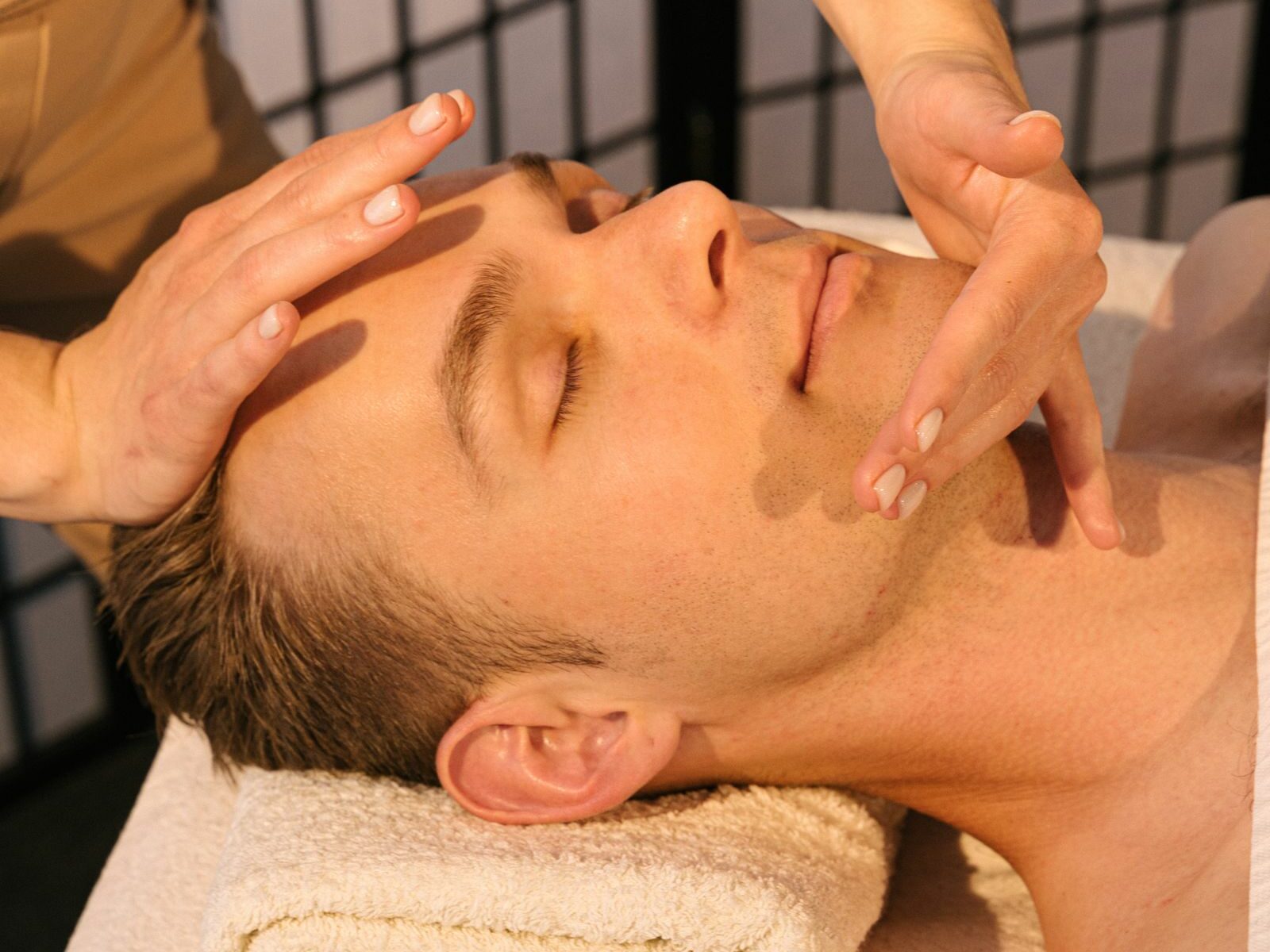
Un homme reçoit un massage du visage en institut de soin
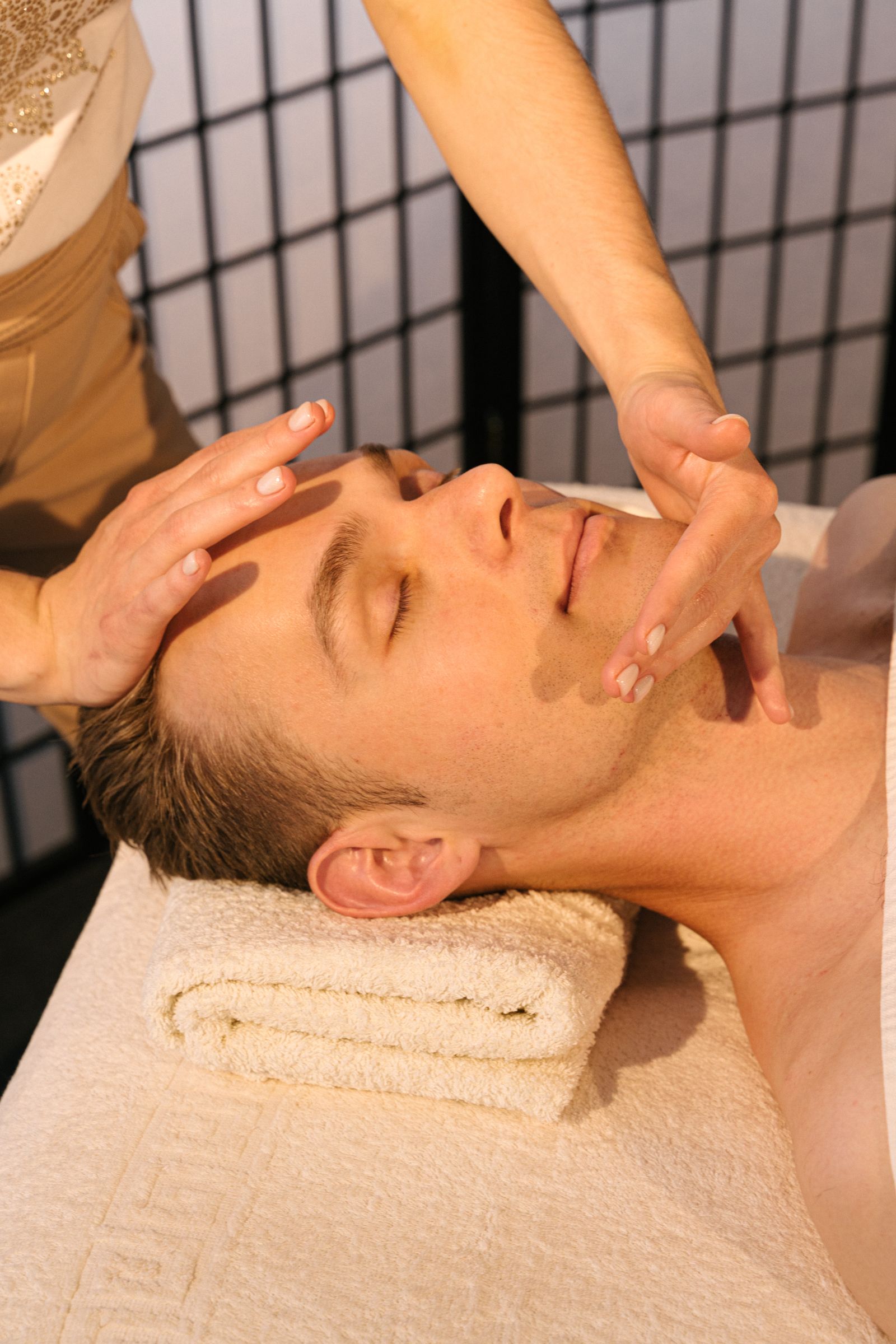
A man receiving a facial massage in a treatment studio

Summer doesn't just tan the skin, it unsettles it. UV, sea salt, chlorine and heat all wear away the lipid cement that seals the face: hence the drier, duller, sometimes reactive skin we meet again come September. Getting back on track isn't about starting over, it's about rebuilding a damaged structure, in the right order. Here's how, in three movements: rebuild the barrier, set a routine, and understand why facial massage, from ancient Egypt to today's laboratories, remains the treatment with the best effort-to-result ratio there is.

1. Rebuilding the skin barrier, brick by brick

The skin barrier is the stratum corneum, a wall built on the brick-and-mortar model: the corneocytes are the bricks, set in a mortar of layered lipid bilayers, ceramides, cholesterol and free fatty acids. This cement curbs insensible water loss (TEWL, the water that evaporates continuously through the skin and serves as a marker of barrier integrity) and keeps irritants out, provided the physiological ratio holds: roughly 50% ceramides, 25% cholesterol, 25% fatty acids. Ceramides alone won't hold the bilayer together, which is precisely where triple-lipid formulas earn their place.

Summer breaks this system: UV degrades the lipids and stokes inflammation, chlorine and salt strip away oils and proteins, upset the pH and drive oxidative stress. TEWL climbs, and the skin turns dry, dull and reactive. You rebuild it with regular, gentle care over four to six weeks, using actives with a genuine mechanism: niacinamide boosts ceramide synthesis, panthenol (B5) acts as its cofactor, squalane slots into the matrix and lowers TEWL with no comedogenic effect (it locks in the water that hyaluronic acid only draws to the surface), and madecassoside calms by inhibiting the NF-kappaB pathway.

On the product side, the finest formulas come from niche dermatology and Korean laboratories (multi-lamellar emulsion technology, MLE). The Zerafite Wrinkle Defense (Dr Leslie Baumann) delivers the physiological ratio in a version geared to mature skin. More accessible, the Aestura Atobarrier 365 (Korean pharmacy brand from Amorepacific) encapsulates ceramide, cholesterol and fatty acids in a lamellar structure, with a measurable drop in TEWL.

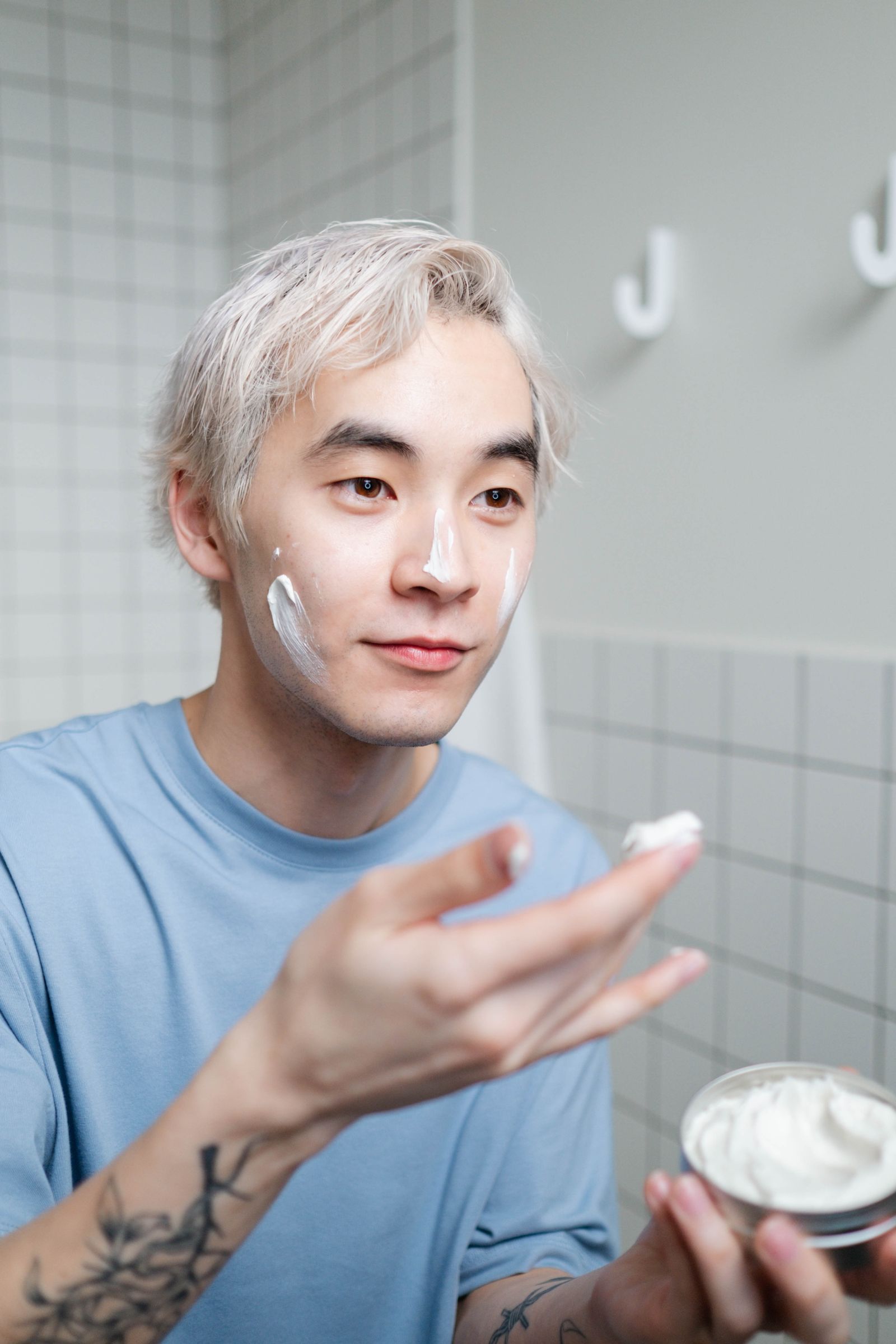
2. The back-to-routine ritual for men, in four steps

No need for a bathroom full of bottles. Four steps, always the same, morning and night. It's the consistency that repairs, not the quantity.

Four to six weeks of this simple routine and the skin turns supple, comfortable and clearer again. Consistency does all the work.

3. Egypt and science: facial massage, then and now

Let's set aside Cleopatra and her milk bath, that tired cliché. The Egyptian reality is far more interesting, and far more technical. The Ebers Papyrus, a medical scroll some eighteen metres long dated to 1550 BCE, already records blends of beeswax and plant oils against wrinkles, and honey dressings. Honey is no footnote here: diluted, it releases hydrogen peroxide via glucose oxidase, which accounts for its genuine antibacterial action. The oils were chosen for their properties: ben oil, pressed from moringa, mild, near-odourless and slow to turn rancid, reserved for the elite; castor, a workhorse emollient against the dry desert winds; sesame and flax, lighter. They were extracted by pressing, enfleurage or hot maceration: a true chemistry of fats. As for soured milk, it supplied lactic acid, an AHA that dissolves the protein cement binding dead corneocytes, a distant ancestor of the peel.

What has changed is our grasp of the technique. Massaging the face works on two circuits. The lymph, first: it has no central pump and moves thanks to the lymphangions, those valved segments that contract, helped along by external forces such as the pressure of the massage. The Vodder method formalises this: very light pressure, spiralling movements over the superficial lymphatic vessels, starting at the lymph nodes of the neck and the venous angle, where lymph rejoins the blood. You open the neck before sweeping the face, never the reverse. Microcirculation, next: massage raises the supply of oxygen and nutrients, for an immediate glow. The mechanical stimulation even speaks to the fibroblasts, with a controlled study (Caberlotto 2017, PLOS One) showing increased expression of procollagen and tropoelastin in skin explants.

Let's stay honest about the scale: the effects of facial massage are real, but modest and above all temporary, on the order of a few millimetres of de-puffing from manual drainage. The right promise isn't lasting rejuvenation, it's a reawakened complexion, de-puffed features and real relaxation (a drop in cortisol, parasympathetic activation). That is already a great deal, and it is measurable.

After summer, the face deserves a true reset, not one more product. In the studio, the Récupération treatment for men, or La Parenthèse for women, drains, re-oxygenates and erases the marks of the season: the precise complement to the barrier work you carry out at home.

* A common myth: bar soaps do not transfer bacteria to the skin after washing, as the studies on the subject have shown (reference: Heinze and Yackovich, Epidemiology & Infection, 1988). For the barrier, what matters lies elsewhere, in the pH: a truly alkaline soap strips, whereas a soap-free cleanser at physiological pH respects the skin.

A Clear Complexion, Your Quiet Weapon of Seduction

Portrait dynamique en noir et blanc avec eclaboussure d eau
Dynamic black and white portrait with a water splash

Your complexion speaks before you do. Before the first word, before the first smile, it announces your age, your energy, your health. It is a weapon of seduction, quiet and formidable. Here is why, and how to win it back.

Why a clear, even complexion seduces

The work of Bernhard Fink and Paul Matts settled it: at equal wrinkle depth, an even complexion reads as younger, healthier, more attractive. The eye clocks regularity before it clocks texture. And this has nothing to do with skin tone: it is uniformity that wins.

Ian Stephen pushed it further: skin rich in carotenoides and well oxygenated is perceived as healthier and more radiant. That glow, in other words, comes from within. It is grown on the plate before it is caught in the mirror.

A clear complexion signals brisk microcirculation, cellular machinery running at full tilt, a body that repairs itself. Your skin is your first CV: it reports your inner state, line by line.

What dulls a complexion

  • Glycation: excess sugar latches onto proteins and forms AGEs; collagen stiffens, the complexion yellows and loses its bounce.
  • Oxidative stress: pollution, UV and tobacco throw off free radicals that oxidise cells, grey the complexion and etch in dark spots.
  • Sluggish microcirculation: fatigue, a sedentary life and stress starve the skin of oxygen, and the face turns ashen.
  • Dead cells: with age, renewal slows, the surface thickens and scatters light poorly, hence the dull cast.
  • Lack of sleep: skin repairs itself at night; cut that short and you wake to a murky, drawn complexion, with a hit of cortisol to match.
  • Irregularities: sun spots, broken capillaries and dehydration break the very uniformity the eye is hunting for.

Your plate, your first treatment

Radiance is not only applied, it is eaten. Beautiful skin is built from the inside out: it starts on the plate, long before any cosmetic. Certain nutrients genuinely lodge in the skin and shift what the eye takes in. Here is the map of a complexion that glows.

Carotenoides are the pigments of a healthy glow: they accumulate in the skin and lend it a luminous halo, that warm radiance that seems to rise from underneath. Look for them in carrot, sweet potato, squash, bell pepper, mango, apricot, cooked tomato (rich in lycopene) and dark leafy greens.

Polyphenols protect and light up the skin. Red berries and blueberries, green tea (its EGCG), dark chocolate above 70 percent (its flavanols measurably improve cutaneous microcirculation), pomegranate and virgin olive oil: an antioxidant guard to be savoured without guilt.

Omega-3s feed the cell membrane and reinforce the skin barrier, all while calming inflammation. Salmon, sardine, mackerel, walnuts, flax or chia seeds: everything it takes to keep skin supple and plump from within.

Vitamine C drives collagen synthesis and evens the complexion: kiwi, blackcurrant, citrus and bell pepper are brimming with it. A newer lead, the gut: fermented foods (kefir, kimchi, yoghurt) keep the microbiome in balance, and research increasingly ties a clear complexion to a healthy gut. One last reflex, the most decisive of all: less sugar, fewer high-glycaemic foods, to cut glycation off at the source.

Recharging the skin's batteries

Here is the advice that leaves the beaten path. At the core of every skin cell sit the mitochondries, its power plants. With age, UV and stress, they take a beating and generate less energy: skin repairs and renews itself less well, and the complexion goes flat. Recharging these batteries is the frontier of skin longevity.

The rising star answers to urolithine A (brand Mitopure), a postbiotic drawn from pomegranate by way of the microbiome. It triggers mitophagie: the cell recycles its worn-out mitochondria and builds fresh ones. So far, the solid evidence rests mainly on oral intake (muscle, energy); in topical use, the data are still emerging. I will put it plainly: it is promising, not yet proven on the complexion.

Another niche lead, bleu de methylene, an antioxidant that goes straight for the mitochondria, still at the exploratory stage in cosmetics. And the bridge back to the plate has a name: astaxanthine, that red pigment of micro-algae and salmon, one of the most powerful antioxidants known, which shields both the mitochondria and collagen.

The expert's eye

In the treatment room, I wake up microcirculation through massage and lymphatic drainage: blood floods in, oxygen feeds the tissues, the healthy glow is instant. Intra-oral (buccal) massage works the face from the inside, releases tension and redraws its contours. These gestures fire up the engine that the plate keeps running day to day.

At home, the essentials you already know: vitamine C, niacinamide, gentle exfoliation and non-negotiable SPF. No need to labour them: they lay the foundation, but it is the plate, the hands-on work in the treatment room and these new leads that make the real difference.

The truest answer is a treatment cut for your skin, one that builds the protocol around the needs of the moment: radiance, drainage, targeted actives. For him, Le Protocole Signature. For her, le Rituel sur mesure. Give your complexion the bespoke care it deserves.

Book now