


Recovery mode: repair, nourish, de-puff

Homme avec une planche de surf sur une plage ensoleillée
Recovery after the beach and the gym

Beach, sport, evenings out: summer is an active season, and the skin takes the hit. Salt, perspiration, sun, a few too many drinks, and the face soon shows it. Three ways to recover: repairing the surface, nourishing from within, and easing the puffiness from the features.

1. Repairing after the beach and the gym

The combination of sun, salt, sweat and towel dehydrates the skin and weakens its barrier, which brings tightness, redness and a dull complexion the next day. The instinct should not be to strip the skin, but to repair it quickly. On your return, rinse with cool water, then repair. Panthenol soothes and rebuilds the barrier, which is the whole point of the Cicaplast Baume B5 from La Roche-Posay. Niacinamide, for its part, strengthens that same barrier and calms redness, and you will find it concentrated in the Niacinamide 10% + Zinc serum from The Ordinary. To rehydrate and refresh after the sun, nothing beats a pure aloe vera gel, such as the Aloe Vera 92% from Nature Republic. In the morning, finally, one or two drops of vitamin C revive radiance and neutralise the sun's damage: the benchmark remains the C E Ferulic from SkinCeuticals, or The Ordinary Vitamin C for a gentler budget. One golden rule above all: you never exfoliate skin that is already stressed, you wait until it has calmed.

2. Kefir and kombucha: summer in a glass

Fermented drinks support the gut microbiome, that second brain which converses with the skin and to which we will return this winter. Put plainly, what happens in the gut is often written on the face. Kefir and kombucha make excellent substitutes for sodas when you are out in the sun, provided you choose well. The honest caveat is that many shop-bought kombuchas are very sweet. The right way to read a label is to aim for less than two grams of sugar per hundred millilitres. For kombucha, two names to keep in mind: Remedy, which contains no sugar at all, and the small, lightly sweetened artisanal brands such as Karma Kombucha. For kefir, favour a plain, unflavoured one, bearing in mind that water kefir is lighter than the milk kind, and steer clear of the fruity versions loaded with sugar.

3. Lymphatic drainage: easing the puffiness

Heat, salt, alcohol and short nights: summer tends to swell the face, leaving heavier features, a tired gaze and a less defined jaw on waking. This is fluid retention, and it can be worked on. Lymphatic drainage, through precise manual massage or with a gua sha, revives the circulation, clears the excess water and redraws the contours. At home, give yourself a few minutes of slow movements, from the centre of the face towards the ears and then the neck. In the studio, the result is immediate and visible: a sharper jaw, an open gaze, a revived complexion, ideal before an occasion that matters.

Recovery is part of performance. In sixty minutes, a protocol of drainage and repair erases the fatigue of summer: redrawn features, a rested gaze.
→ Book your ritual.

Coffee, sun and sweat: summer under control

Homme tenant une tasse de café, lumière chaude derrière une vitre
Coffee, sun and sweat: keeping a clear complexion in summer

Summer does not forgive carelessness. A coffee gulped down at the corner of a desk, the sun, the heat that leaves the skin shining: three forces that mark the face if you let them. Here is how to keep the upper hand.

1. Coffee and skin: friend or foe?

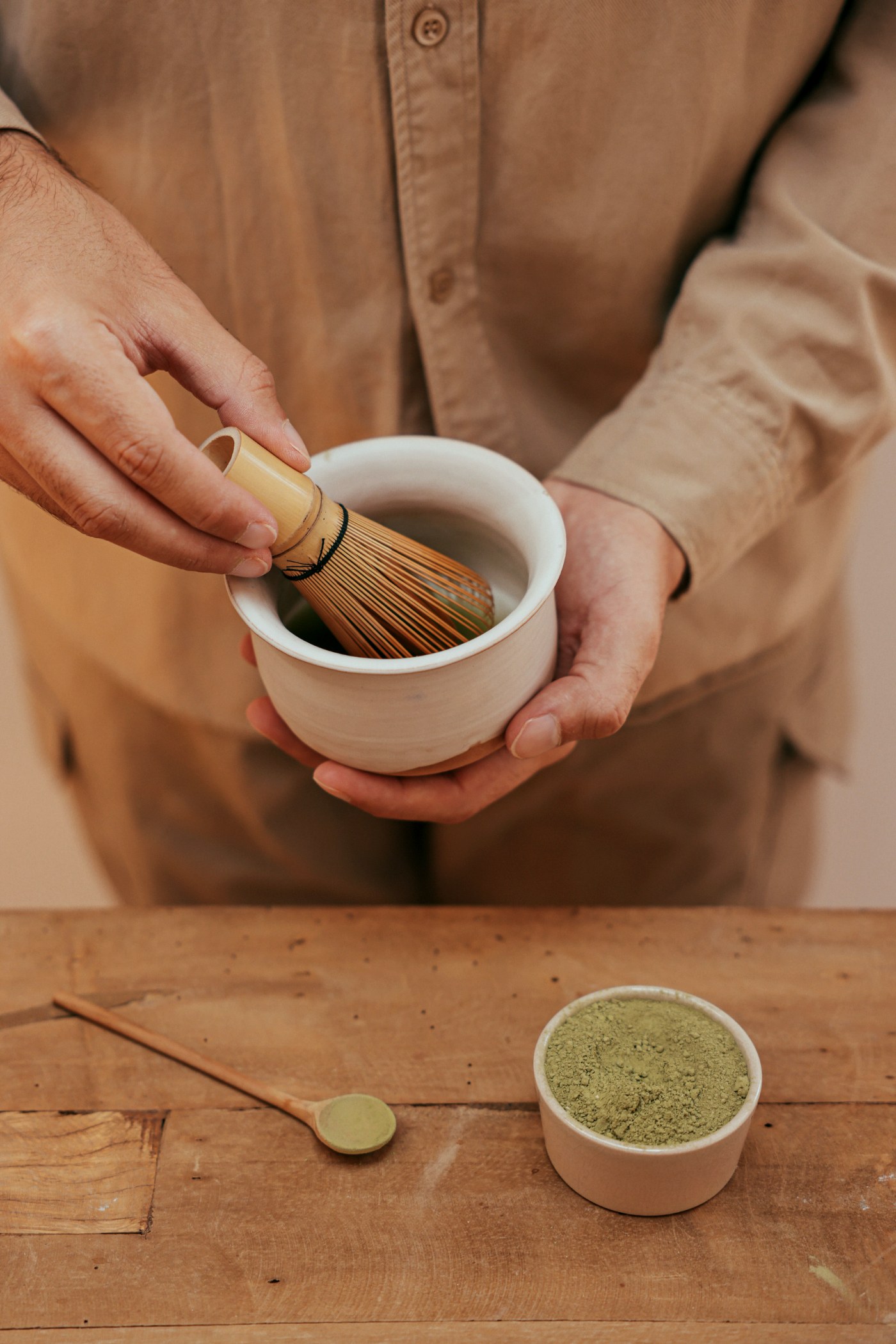
Good news to begin with: coffee is not your skin's enemy. It is even rich in antioxidants. The problem does not lie in the coffee itself, but in everything we add around it. There are three traps, in truth: sugar, which dulls the complexion, excess, since caffeine is a diuretic and dehydrates, and timing, when a coffee stands in for a real glass of water. Using it well comes down to a few simple rules: one to three coffees a day, with little or no sugar, always alongside water, and preferably in the morning, since the skin repairs itself at night and it would be a shame to cut your sleep short. Fancy a change? Matcha offers antioxidants with a steadier energy, without the spike or the crash.

2. Sun protection: the number one mistake men make

If you remember only one thing, let it be this: sun protection is the most rewarding step in your entire routine. The sun is responsible for the great majority of visible ageing, whether wrinkles, dark spots, sagging or a dull complexion. And not in ten years' time, but now, with every exposure. The mistake men make is to believe that SPF is for the beach. Yet UV rays pass through clouds and glass, so the commute, the lunch outdoors and the coffee in the sun all count. The right reflex is simple: an SPF 30 to 50 every morning, summer and winter alike. Look for a fluid, matte and non-greasy texture. Three safe choices for this: La Roche-Posay Anthelios (an invisible fluid), Beauty of Joseon Relief Sun (a natural finish, with no white cast) and Biotherm Homme UV Defense. Fifteen seconds to apply, and it is the best anti-ageing investment there is, the one no one ever regrets.

3. Sweat: a clear complexion all day long

Heat makes you sweat: the skin shines, the pores become visible, and the complexion turns dull by the middle of the day. There is no need for a complicated routine, only the right steps at the right moment. In the morning: a gentle cleanser, a light moisturiser, SPF. In the middle of the day, after exertion or a journey, a pass of facial mist works wonders (see last week), or failing that a rinse with cool water, patted rather than rubbed. In the evening, you cleanse to remove sweat, sebum and pollution, and this is not up for negotiation. Three minutes in the morning, three at night: that is all it takes to move through summer with a clear face.

The sun and fatigue mark the face in silence. In sixty minutes, a precision protocol erases the traces of summer and reveals a clear, rested complexion.
→ Book your ritual.

Heatwave: should you drink iced, hot, or lukewarm?

Théière marocaine au soleil, vapeur

When the thermometer climbs past thirty-five degrees, the instinct is to reach for an ice-cold drink. A poor choice? Not quite so simple. Here is a quick look, with the science to back it up.

1. Iced drinks: a false friend

A very cold drink is refreshing in the moment, there is no denying it. Yet there is a catch: on receiving that signal of cold, the body cuts down its perspiration. And it is precisely sweat, as it evaporates, that truly cools you down. The result is immediate relief, but body heat that is released less efficiently over time. Not to mention the thermal shock, which can be hard on the digestion.

2. Hot drinks: a paradox that holds up

It seems counterintuitive, yet the work of the thermoregulation researcher Ollie Jay, at the University of Sydney*, has shown it: a hot drink can actually help you cool down. By raising your temperature slightly, it makes you sweat a little more, and it is that evaporation which brings the body's temperature down. A word on the conditions, though: it only works if the sweat can evaporate, which means dry air and uncovered skin. In full humidity, or buttoned into a suit, all you gain is the heat. The mint tea of hot countries, then, is no accident.

3. The right compromise: cool, not iced

Between the two extremes, practical sense wins out. Health authorities recommend neither: their message is to hydrate regularly, with cool rather than iced water, and to steer clear of alcohol and excess sugar. Temperate water has one concrete advantage, namely that it is better tolerated, so you drink more of it and hydrate more effectively. And what of the skin in all this? Good internal hydration means a less dull complexion and a barrier that holds firm. In a heatwave, your face is every bit as thirsty as you are.

Heat puts your skin to the test. In sixty minutes, a ritual of freshness and drainage for a clear, rested complexion, even at the height of summer.
→ Book your ritual.

* Bain AR, Lesperance NC, Jay O., "Body heat storage during physical activity is lower with hot fluid ingestion under conditions that permit full sweat evaporation", Acta Physiologica, 2012.

Book now