Every autumn, the same scene. You run a hand through your hair and find strands on the pillow, in the shower, on your collar. The little voice starts up: this is it, I'm going bald. Breathe. In the vast majority of cases, it's normal and temporary. What matters is telling a real warning from a false alarm, and looking where no one looks: this skin, beneath the hair.
Autumn shedding: understand it before you panic
Your hair lives by a cycle in three acts: growth (anagen), two to six years and 85% of your head of hair; a short transition (catagen); then rest (telogen), at the end of which the hair falls and makes way for a new one. Hence the figure: losing 50 to 100 hairs a day is normal. These aren't lost hairs, they are replaced hairs.
Seasonal autumn shedding is real and documented. At the end of summer, under the effect of the photoperiod (the change in day length), more hairs shift into telogen, and the shedding appears a few weeks later. This is seasonal telogen effluvium: diffuse, benign, temporary, it clears up in two to six months. Spectacular, sometimes worrying, but not a disease.
Still, you have to tell them apart. Telogen effluvium can also be triggered by significant stress, an iron deficiency, a restrictive diet or an illness: there, you need to find the cause. And then there is androgenetic alopecia, the one that worries men most: the temples receding, the crown thinning, under the effect of a genetically programmed sensitivity of the follicle to dihydrotestosterone (DHT). With each cycle, the follicle miniaturizes: the hair grows back finer, shorter, until it no longer grows back. That one does not clear up on its own.
When to see a specialist, a dermatologist or an aesthetic physician, without delay: shedding that lasts more than three months, localized thinning at the temples or the crown, a scalp that turns red or itches, or sudden, massive loss. In these cases, it is no longer the season talking.
The scalp is cared for like a face
We nearly all forget it: the scalp is skin in its own right. The same skin barrier as the face, with its own particularities: more sebaceous glands, and a microbiome all its own. It is stretched by the galea, in direct continuity with the muscles of the face. To neglect this skin is to neglect the root, where the follicle is born.
Scalp massage, designed for the hair, follows a precise logic. It boosts microcirculation, and with it the supply of oxygen and nutrients to the bulb, while the mechanical stretching of the tissues is thought to stimulate the cells that drive hair growth. Under the hand, it comes down to this: the neck lets go, the temples release, the scalp becomes mobile again instead of clinging to the bone. A small Japanese study (Koyama, 2016, 9 participants), four minutes a day for 24 weeks, measured thicker hair. The effect is real but modest: a matter of consistency.
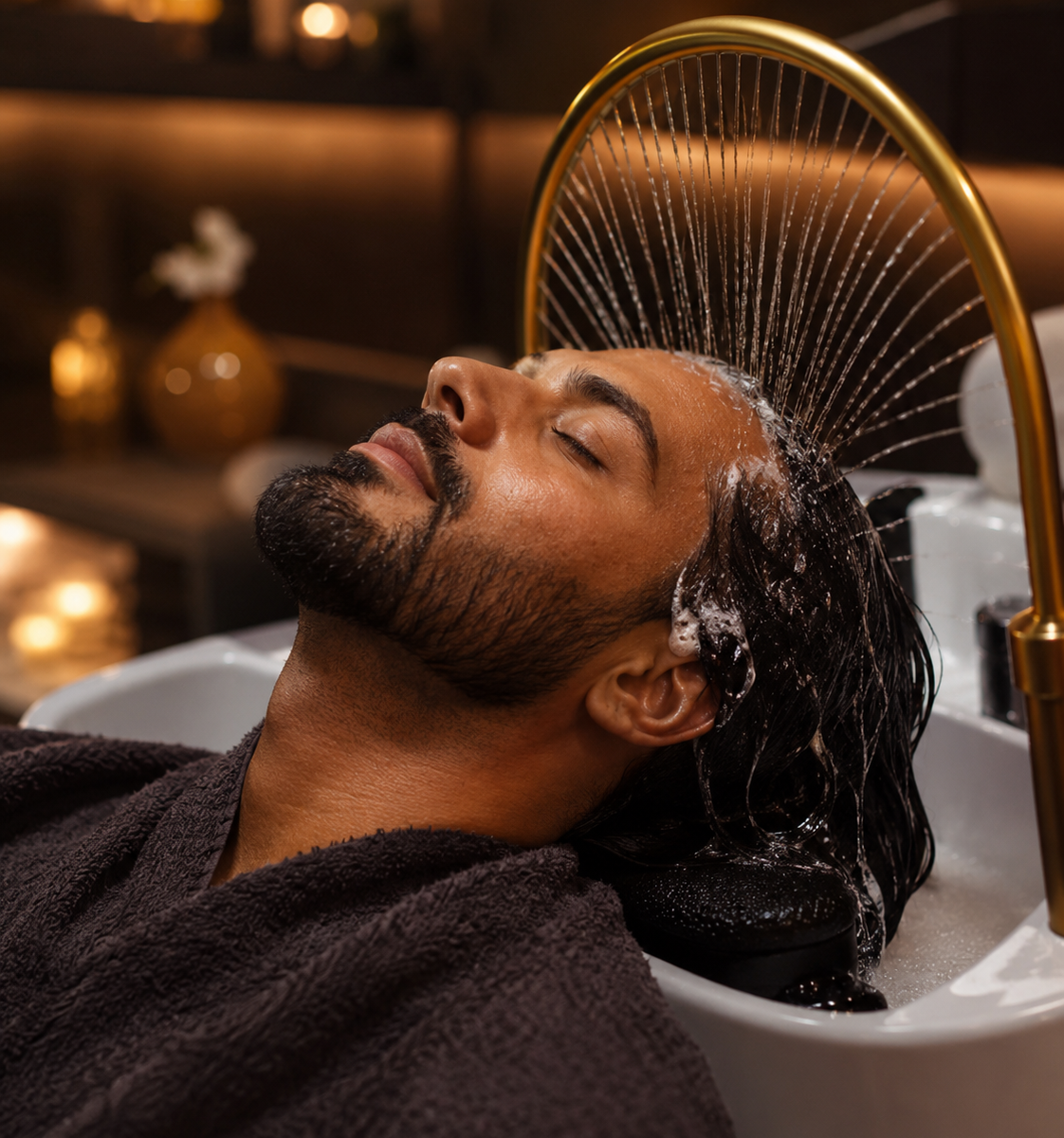
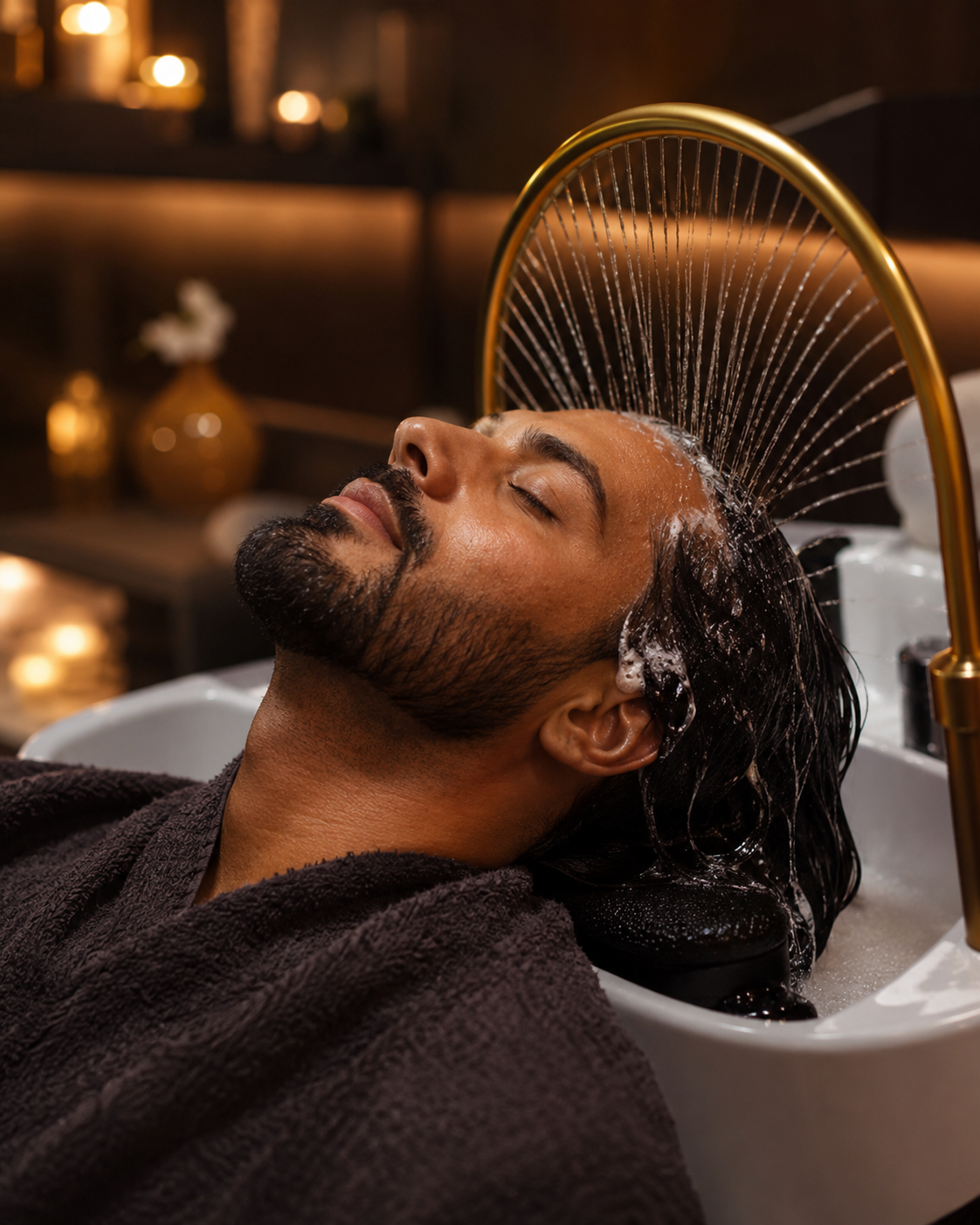
This is the whole point of scalp skinification: bringing to the crown the rigor of facial care. Gentle exfoliation, serums, targeted actives. This ritual even has a name, the head spa, born in Japan, and a reference in Paris, Flora Lab, whose signature says it all: "molecular skin therapy for hair." We no longer treat hair by its length: we care for the ground it grows from, and it deserves the same hands as the face.
The ladder of solutions, from serum to transplant
Here are the options, from the gentlest to the most radical. For each, what is proven, and what still belongs to hope.
- Care, serum and scalp massage: the first step, the one you can keep up daily. Actives to know: caffeine, copper peptides (GHK), and rosemary oil, which one study (Panahi, 2015) found comparable to 2% minoxidil over six months (5% minoxidil remains superior). A serum like those from Aroma-Zone brings these actives together. What matters isn't the bottle, it's the consistency of the gesture.
- Hair mesotherapy: micro-injections of vitamins and trace elements into the scalp, at the doctor's. A popular approach, but limited evidence: to be seen as a boost, not a foundational treatment.
- Intramuscular injections, the vitamin cure: Bépanthène (dexpanthenol, provitamin B5) and keratin intramuscularly, given by a nurse. A supply of cofactors, a gentle approach, with no clinical evidence to date, but no aggressiveness either.
- The medical references: on medical advice, minoxidil (topical) and finasteride (oral) are the two foundational treatments genuinely proven against androgenetic alopecia. Finasteride, by prescription, is not indicated for women of childbearing age. PRP, platelet-rich plasma, is gaining ground, with evidence still being built.
- Hair transplant: FUE or FUT, the last resort, for established baldness. Durable and effective, but a surgical procedure, not a starting point.
Nothing makes hair grow back by magic. You maintain the ground, you treat according to the stage and on medical advice, and the transplant remains the ultimate step.
The first step is also the only one you feel right away. Hands that find the galea and loosen it, warmth rising from the neck to the temples, that feeling, by the end, of having finally released something you had been holding for months. Blood returns, the follicle breathes. What this gesture brings beyond the hair is another story. We won't promise you a miracle, but a living, tended ground and a true moment of silence. Book Récupération for men, or La Parenthèse for women, and start where everything starts: the root.