Autumn shedding: the scalp, that skin we forget

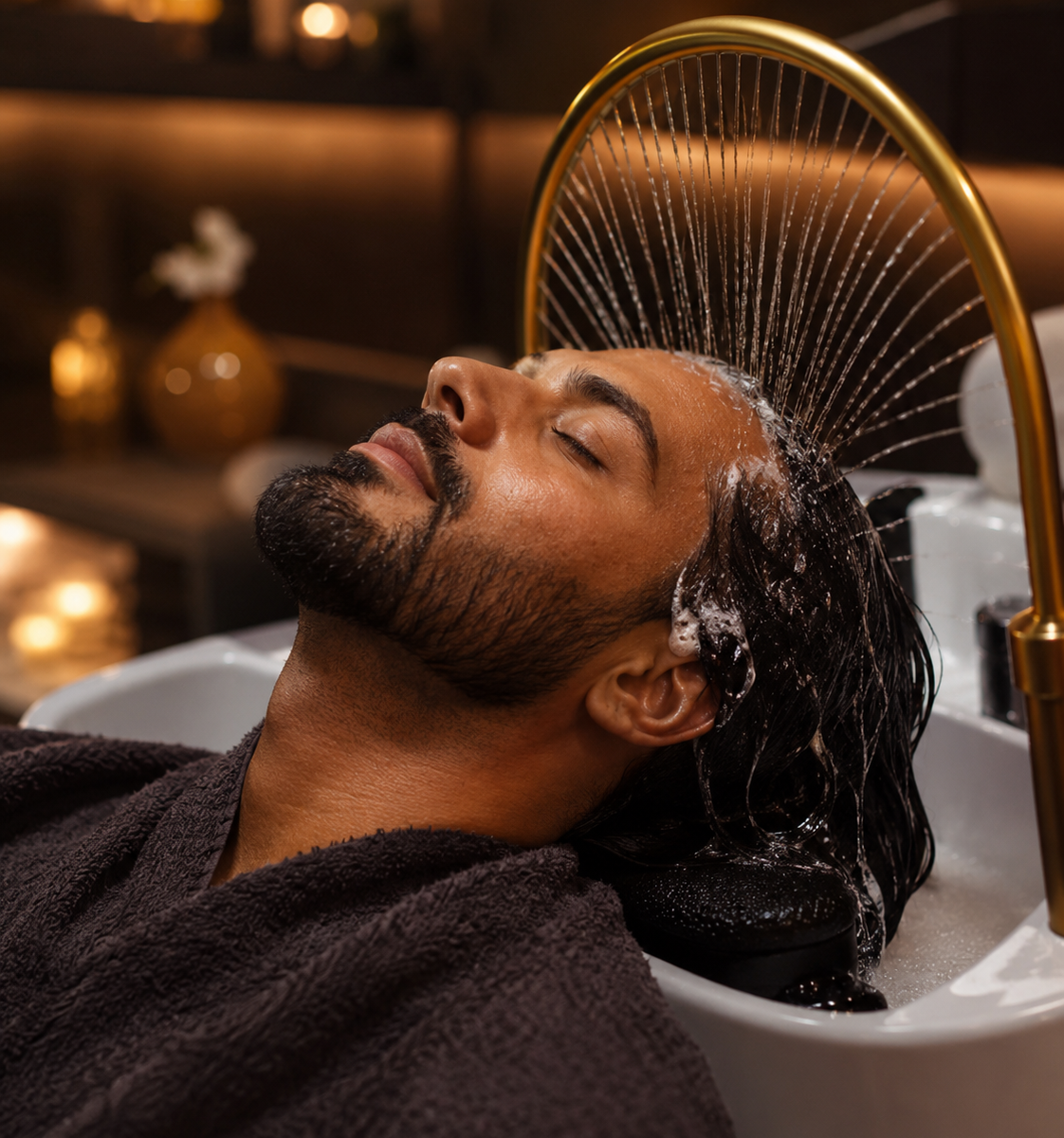
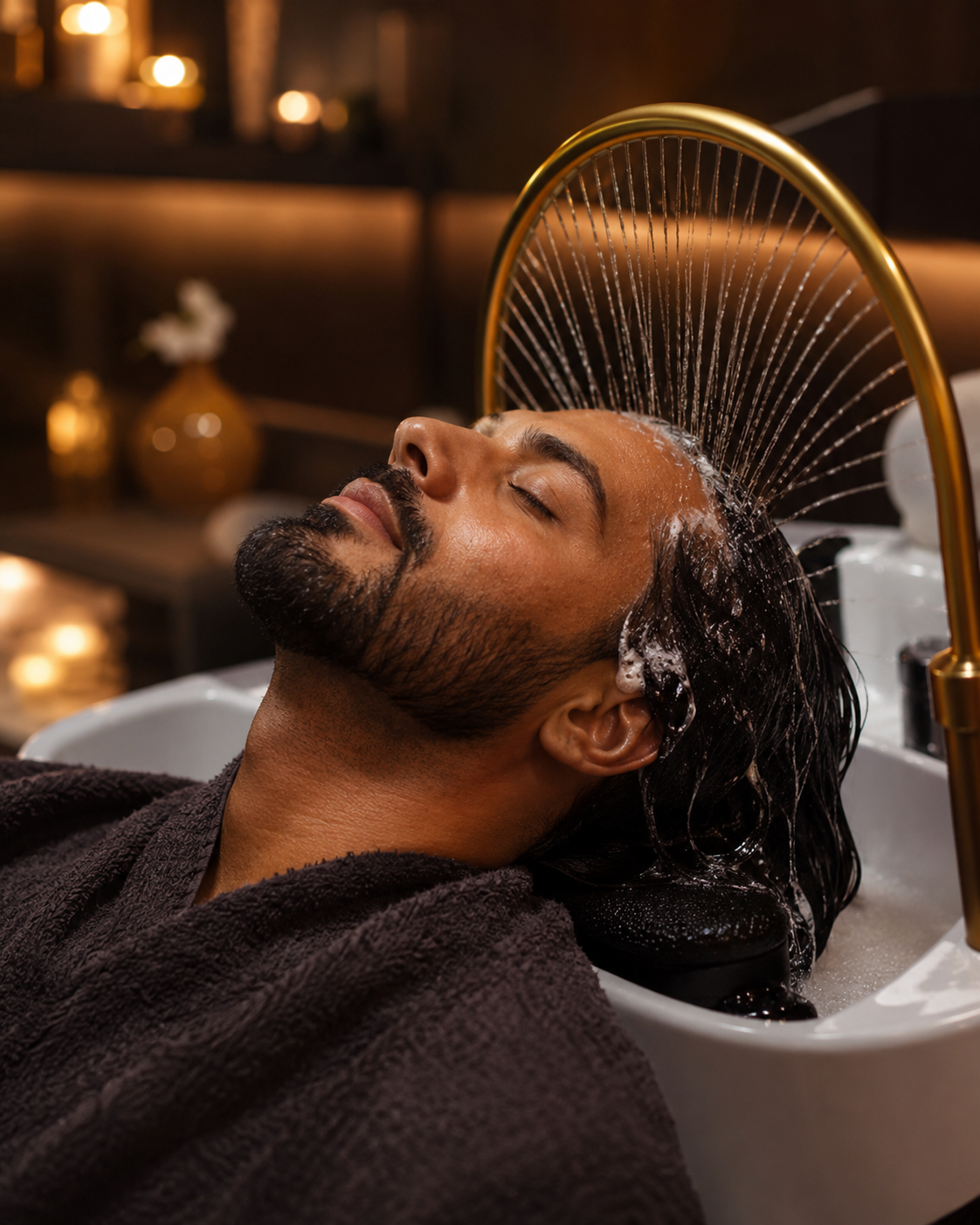
Un homme reçoit un soin du cuir chevelu sous une cascade d'eau, dans l'ambiance feutrée d'un head spa
A man receives a scalp treatment under a cascade of water, in the hushed atmosphere of a head spa

Every autumn, the same scene. You run a hand through your hair and find strands on the pillow, in the shower, on your collar. The little voice starts up: this is it, I'm going bald. Breathe. In the vast majority of cases, it's normal and temporary. What matters is telling a real warning from a false alarm, and looking where no one looks: this skin, beneath the hair.

Autumn shedding: understand it before you panic

Your hair lives by a cycle in three acts: growth (anagen), two to six years and 85% of your head of hair; a short transition (catagen); then rest (telogen), at the end of which the hair falls and makes way for a new one. Hence the figure: losing 50 to 100 hairs a day is normal. These aren't lost hairs, they are replaced hairs.

Seasonal autumn shedding is real and documented. At the end of summer, under the effect of the photoperiod (the change in day length), more hairs shift into telogen, and the shedding appears a few weeks later. This is seasonal telogen effluvium: diffuse, benign, temporary, it clears up in two to six months. Spectacular, sometimes worrying, but not a disease.

Still, you have to tell them apart. Telogen effluvium can also be triggered by significant stress, an iron deficiency, a restrictive diet or an illness: there, you need to find the cause. And then there is androgenetic alopecia, the one that worries men most: the temples receding, the crown thinning, under the effect of a genetically programmed sensitivity of the follicle to dihydrotestosterone (DHT). With each cycle, the follicle miniaturizes: the hair grows back finer, shorter, until it no longer grows back. That one does not clear up on its own.

When to see a specialist, a dermatologist or an aesthetic physician, without delay: shedding that lasts more than three months, localized thinning at the temples or the crown, a scalp that turns red or itches, or sudden, massive loss. In these cases, it is no longer the season talking.

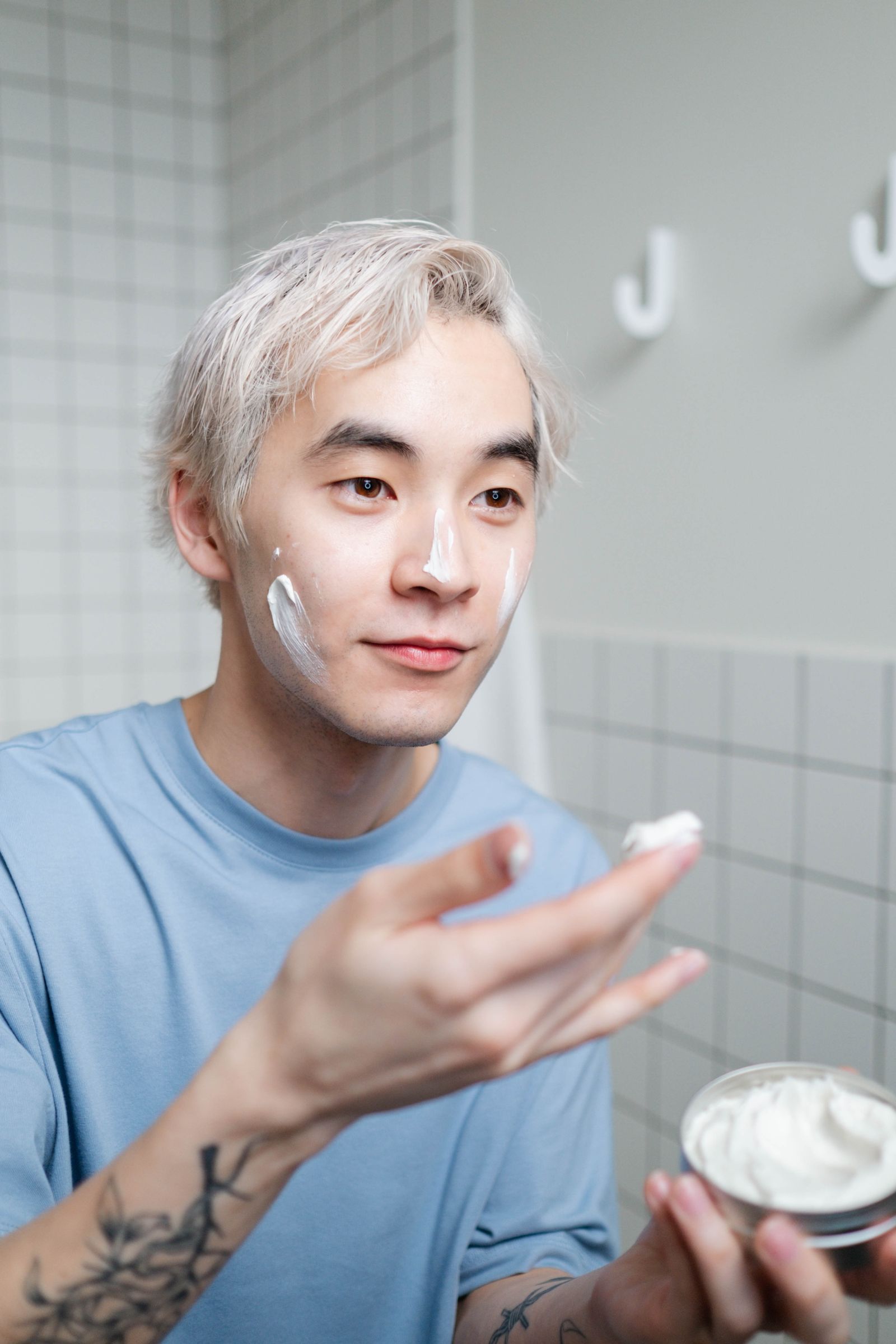
The scalp is cared for like a face

We nearly all forget it: the scalp is skin in its own right. The same skin barrier as the face, with its own particularities: more sebaceous glands, and a microbiome all its own. It is stretched by the galea, in direct continuity with the muscles of the face. To neglect this skin is to neglect the root, where the follicle is born.

Scalp massage, designed for the hair, follows a precise logic. It boosts microcirculation, and with it the supply of oxygen and nutrients to the bulb, while the mechanical stretching of the tissues is thought to stimulate the cells that drive hair growth. Under the hand, it comes down to this: the neck lets go, the temples release, the scalp becomes mobile again instead of clinging to the bone. A small Japanese study (Koyama, 2016, 9 participants), four minutes a day for 24 weeks, measured thicker hair. The effect is real but modest: a matter of consistency.

This is the whole point of scalp skinification: bringing to the crown the rigor of facial care. Gentle exfoliation, serums, targeted actives. This ritual even has a name, the head spa, born in Japan, and a reference in Paris, Flora Lab, whose signature says it all: "molecular skin therapy for hair." We no longer treat hair by its length: we care for the ground it grows from, and it deserves the same hands as the face.

The ladder of solutions, from serum to transplant

Here are the options, from the gentlest to the most radical. For each, what is proven, and what still belongs to hope.

  • Care, serum and scalp massage: the first step, the one you can keep up daily. Actives to know: caffeine, copper peptides (GHK), and rosemary oil, which one study (Panahi, 2015) found comparable to 2% minoxidil over six months (5% minoxidil remains superior). A serum like those from Aroma-Zone brings these actives together. What matters isn't the bottle, it's the consistency of the gesture.
  • Hair mesotherapy: micro-injections of vitamins and trace elements into the scalp, at the doctor's. A popular approach, but limited evidence: to be seen as a boost, not a foundational treatment.
  • Intramuscular injections, the vitamin cure: Bépanthène (dexpanthenol, provitamin B5) and keratin intramuscularly, given by a nurse. A supply of cofactors, a gentle approach, with no clinical evidence to date, but no aggressiveness either.
  • The medical references: on medical advice, minoxidil (topical) and finasteride (oral) are the two foundational treatments genuinely proven against androgenetic alopecia. Finasteride, by prescription, is not indicated for women of childbearing age. PRP, platelet-rich plasma, is gaining ground, with evidence still being built.
  • Hair transplant: FUE or FUT, the last resort, for established baldness. Durable and effective, but a surgical procedure, not a starting point.

Nothing makes hair grow back by magic. You maintain the ground, you treat according to the stage and on medical advice, and the transplant remains the ultimate step.

The first step is also the only one you feel right away. Hands that find the galea and loosen it, warmth rising from the neck to the temples, that feeling, by the end, of having finally released something you had been holding for months. Blood returns, the follicle breathes. What this gesture brings beyond the hair is another story. We won't promise you a miracle, but a living, tended ground and a true moment of silence. Book Récupération for men, or La Parenthèse for women, and start where everything starts: the root.


Japan and Korea: Two Schools of the Face

Temple japonais au bord de l’eau

There are two ways to care for a face: the hand or the science. The patient touch of a master, passed down over centuries, or the precision of a clinic that teaches the skin to repair itself. Asia has carried both further than anywhere else, and each goes by a name: in Japan, Kobido; in Korea, the routine and aesthetic medicine. Two schools, two philosophies, one shared ambition: living skin.

1. Japan, the art of the hand

The Kobido tradition dates back to 1472. The name evokes the "ancient way of beauty," and it is said to have been born in service of the imperial court, long reserved for an elite and passed from master to disciple. This is nothing like a simple relaxing massage: it is a craft, a choreography of the hands.

The technique is striking in its rhythm. Countless movements follow one another at remarkable speed, tapping and gliding by turns to work the muscles, the circulation and the drainage. It is often called a "lift without a scalpel": more a reputation than a medical promise. Microcirculation is stimulated, lymphatic drainage reawakened, the muscles relaxed and toned at once. The complexion brightens and the features look rested, often by the end of the very first session.

One important nuance: Kobido does not work in a single, dramatic session the way aesthetic medicine does. Its strength lies elsewhere, in time. A face massaged every month is genuinely transformed: the features soften, the jawline firms, the complexion lights up, and the results settle in and build session after session. It is a treatment cultivated like fitness: the more regularly you return, the more the skin responds, and the more the face keeps that rested, living quality.

2. Korea, the routine

A complete shift in logic. Korea stakes nothing on a single gesture, but on a method. Its routine rests on a principle of application in layers, layering: textures are applied from the most fluid to the richest, so that each one absorbs before the next. Ten steps are often mentioned, but the number is misleading.

  • The foundation (about five steps): double cleansing (oil then water), toner, moisturizer and sun protection. The essentials, non-negotiable.
  • The targeted additions: essence, serum, sheet mask, eye care. Not an obligation, but a menu of possible treatments, chosen for the skin and the moment.

The philosophy behind this ritual comes down to a single idea: prevention rather than correction, and "skin first." Hydration in layers is about more than comfort. Well-hydrated skin absorbs active ingredients better, and a healthy skin barrier holds up better against time and daily stressors. You maintain skin that functions well so that problems never arise, rather than treating them after the fact.

All of this works toward an ideal that has become famous: glass skin. Not a procedure, but an aesthetic: skin that is clear, smooth, translucent and luminous. It is achieved through layering, never through a single gesture.

3. Korea, aesthetic medicine

If Korea fascinates so much, it is because it has turned skincare into a cutting-edge science. Its clinics offer not an isolated procedure but protocols, in which lasers, injectables, ultrasound and boosters are combined. And, above all, a fundamental shift: from restoring volume toward a regenerative approach, one that teaches the skin to repair itself, with little or no downtime. The aim is not to transform a face, but to achieve skin that is healthy and lastingly beautiful. Here, without the jargon, is what it involves.

  • PDRN skin boosters (Rejuran): micro-injections derived from salmon DNA that stimulate skin renewal. The focus is texture, elasticity and fine lines, gradually. Not a volumizing product, but a skin-quality treatment.
  • Profhilo, hyaluronic acid boosters (such as Skinvive): a non-filling hyaluronic acid, to hydrate deeply and firm. The "plumped from within" effect, without touching the volumes.
  • Exosomes: the regenerative treatment of the moment in Seoul, said to encourage cellular repair. Let's be honest: still experimental at this stage, promising but unproven, and often paired with Rejuran.
  • Ultrasound lifting (HIFU, Ultherapy, Shurink): ultrasound heats the deep layers to tighten the skin and reawaken collagen. A subtle lifting effect on the jawline and neck, over a few months. Far from a surgical facelift.
  • Laser toning: repeated passes of low-energy laser, to even out the complexion, fade dark spots and make the skin glow. One of the pillars of the famous glass skin.
  • Skin botox (micro-botox): superficial, diluted micro-injections, not to freeze the muscles but to tighten pores and refine the skin's texture. A satin finish, prized for looking natural.

The common thread? Never an isolated gesture. Korea combines modalities, layers approaches, and makes healthy skin a goal in itself. It is this coherence, as much as the technology, that explains the enthusiasm the world over.

What Mimisis takes from it

Two schools, then, and neither to be dismissed. Korea impresses with its rigor and its science; Japan reminds us of an older truth. No machine will ever fully replace the hand: its warmth, its attentiveness, that dialogue between two skins that no protocol can reproduce. Science cares for the skin; the hand cares for the person too. At Mimisis, we believe in both, but the touch remains essential.

Curious to experience this lift without a scalpel in the treatment room? We welcome you for Kobido, for him as well as for her, to recover rested features and a healthy glow that only the hand can give.

End-of-Summer Reset: Rebuild the Barrier, Restart Circulation

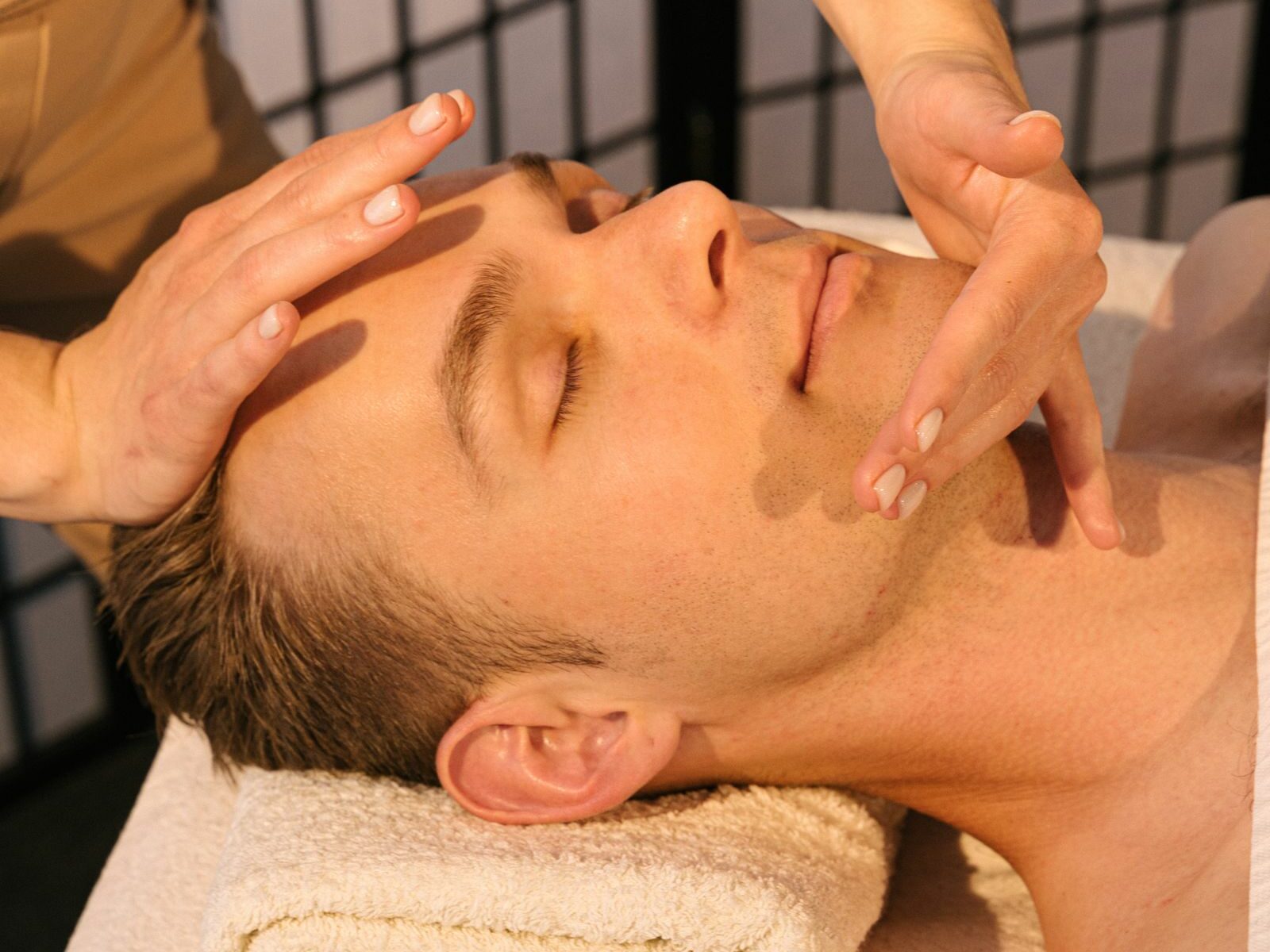
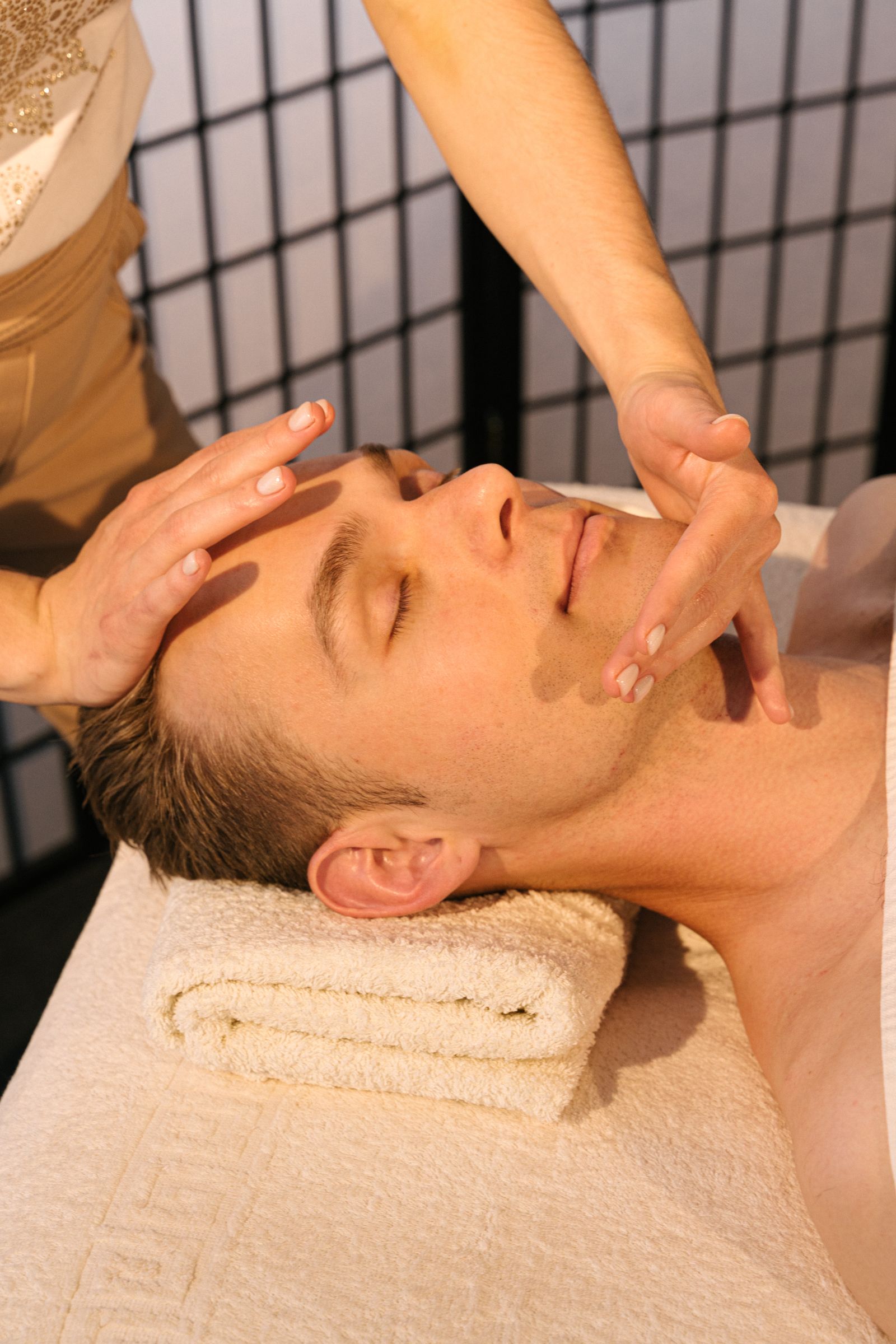
Un homme reçoit un massage du visage en institut de soin
A man receiving a facial massage in a treatment studio

Summer doesn't just tan the skin, it unsettles it. UV, sea salt, chlorine and heat all wear away the lipid cement that seals the face: hence the drier, duller, sometimes reactive skin we meet again come September. Getting back on track isn't about starting over, it's about rebuilding a damaged structure, in the right order. Here's how, in three movements: rebuild the barrier, set a routine, and understand why facial massage, from ancient Egypt to today's laboratories, remains the treatment with the best effort-to-result ratio there is.

1. Rebuilding the skin barrier, brick by brick

The skin barrier is the stratum corneum, a wall built on the brick-and-mortar model: the corneocytes are the bricks, set in a mortar of layered lipid bilayers, ceramides, cholesterol and free fatty acids. This cement curbs insensible water loss (TEWL, the water that evaporates continuously through the skin and serves as a marker of barrier integrity) and keeps irritants out, provided the physiological ratio holds: roughly 50% ceramides, 25% cholesterol, 25% fatty acids. Ceramides alone won't hold the bilayer together, which is precisely where triple-lipid formulas earn their place.

Summer breaks this system: UV degrades the lipids and stokes inflammation, chlorine and salt strip away oils and proteins, upset the pH and drive oxidative stress. TEWL climbs, and the skin turns dry, dull and reactive. You rebuild it with regular, gentle care over four to six weeks, using actives with a genuine mechanism: niacinamide boosts ceramide synthesis, panthenol (B5) acts as its cofactor, squalane slots into the matrix and lowers TEWL with no comedogenic effect (it locks in the water that hyaluronic acid only draws to the surface), and madecassoside calms by inhibiting the NF-kappaB pathway.

On the product side, the finest formulas come from niche dermatology and Korean laboratories (multi-lamellar emulsion technology, MLE). The Zerafite Wrinkle Defense (Dr Leslie Baumann) delivers the physiological ratio in a version geared to mature skin. More accessible, the Aestura Atobarrier 365 (Korean pharmacy brand from Amorepacific) encapsulates ceramide, cholesterol and fatty acids in a lamellar structure, with a measurable drop in TEWL.

2. The back-to-routine ritual for men, in four steps

No need for a bathroom full of bottles. Four steps, always the same, morning and night. It's the consistency that repairs, not the quantity.

Four to six weeks of this simple routine and the skin turns supple, comfortable and clearer again. Consistency does all the work.

3. Egypt and science: facial massage, then and now

Let's set aside Cleopatra and her milk bath, that tired cliché. The Egyptian reality is far more interesting, and far more technical. The Ebers Papyrus, a medical scroll some eighteen metres long dated to 1550 BCE, already records blends of beeswax and plant oils against wrinkles, and honey dressings. Honey is no footnote here: diluted, it releases hydrogen peroxide via glucose oxidase, which accounts for its genuine antibacterial action. The oils were chosen for their properties: ben oil, pressed from moringa, mild, near-odourless and slow to turn rancid, reserved for the elite; castor, a workhorse emollient against the dry desert winds; sesame and flax, lighter. They were extracted by pressing, enfleurage or hot maceration: a true chemistry of fats. As for soured milk, it supplied lactic acid, an AHA that dissolves the protein cement binding dead corneocytes, a distant ancestor of the peel.

What has changed is our grasp of the technique. Massaging the face works on two circuits. The lymph, first: it has no central pump and moves thanks to the lymphangions, those valved segments that contract, helped along by external forces such as the pressure of the massage. The Vodder method formalises this: very light pressure, spiralling movements over the superficial lymphatic vessels, starting at the lymph nodes of the neck and the venous angle, where lymph rejoins the blood. You open the neck before sweeping the face, never the reverse. Microcirculation, next: massage raises the supply of oxygen and nutrients, for an immediate glow. The mechanical stimulation even speaks to the fibroblasts, with a controlled study (Caberlotto 2017, PLOS One) showing increased expression of procollagen and tropoelastin in skin explants.

Let's stay honest about the scale: the effects of facial massage are real, but modest and above all temporary, on the order of a few millimetres of de-puffing from manual drainage. The right promise isn't lasting rejuvenation, it's a reawakened complexion, de-puffed features and real relaxation (a drop in cortisol, parasympathetic activation). That is already a great deal, and it is measurable.

After summer, the face deserves a true reset, not one more product. In the studio, the Récupération treatment for men, or La Parenthèse for women, drains, re-oxygenates and erases the marks of the season: the precise complement to the barrier work you carry out at home.

* A common myth: bar soaps do not transfer bacteria to the skin after washing, as the studies on the subject have shown (reference: Heinze and Yackovich, Epidemiology & Infection, 1988). For the barrier, what matters lies elsewhere, in the pH: a truly alkaline soap strips, whereas a soap-free cleanser at physiological pH respects the skin.

A Clear Complexion, Your Quiet Weapon of Seduction

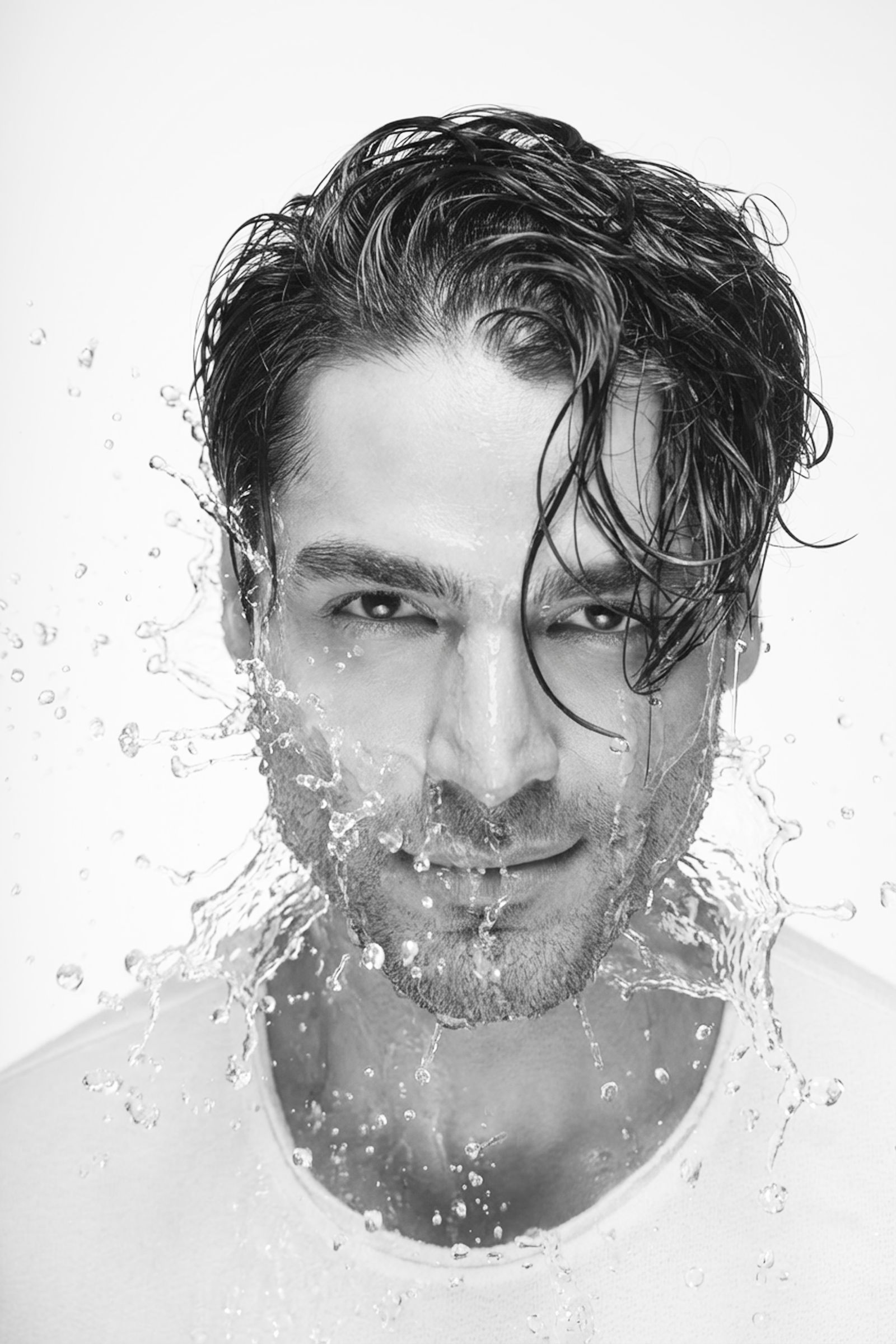
Portrait dynamique en noir et blanc avec eclaboussure d eau
Dynamic black and white portrait with a water splash

Your complexion speaks before you do. Before the first word, before the first smile, it announces your age, your energy, your health. It is a weapon of seduction, quiet and formidable. Here is why, and how to win it back.

Why a clear, even complexion seduces

The work of Bernhard Fink and Paul Matts settled it: at equal wrinkle depth, an even complexion reads as younger, healthier, more attractive. The eye clocks regularity before it clocks texture. And this has nothing to do with skin tone: it is uniformity that wins.

Ian Stephen pushed it further: skin rich in carotenoides and well oxygenated is perceived as healthier and more radiant. That glow, in other words, comes from within. It is grown on the plate before it is caught in the mirror.

A clear complexion signals brisk microcirculation, cellular machinery running at full tilt, a body that repairs itself. Your skin is your first CV: it reports your inner state, line by line.

What dulls a complexion

  • Glycation: excess sugar latches onto proteins and forms AGEs; collagen stiffens, the complexion yellows and loses its bounce.
  • Oxidative stress: pollution, UV and tobacco throw off free radicals that oxidise cells, grey the complexion and etch in dark spots.
  • Sluggish microcirculation: fatigue, a sedentary life and stress starve the skin of oxygen, and the face turns ashen.
  • Dead cells: with age, renewal slows, the surface thickens and scatters light poorly, hence the dull cast.
  • Lack of sleep: skin repairs itself at night; cut that short and you wake to a murky, drawn complexion, with a hit of cortisol to match.
  • Irregularities: sun spots, broken capillaries and dehydration break the very uniformity the eye is hunting for.

Your plate, your first treatment

Radiance is not only applied, it is eaten. Beautiful skin is built from the inside out: it starts on the plate, long before any cosmetic. Certain nutrients genuinely lodge in the skin and shift what the eye takes in. Here is the map of a complexion that glows.

Carotenoides are the pigments of a healthy glow: they accumulate in the skin and lend it a luminous halo, that warm radiance that seems to rise from underneath. Look for them in carrot, sweet potato, squash, bell pepper, mango, apricot, cooked tomato (rich in lycopene) and dark leafy greens.

Polyphenols protect and light up the skin. Red berries and blueberries, green tea (its EGCG), dark chocolate above 70 percent (its flavanols measurably improve cutaneous microcirculation), pomegranate and virgin olive oil: an antioxidant guard to be savoured without guilt.

Omega-3s feed the cell membrane and reinforce the skin barrier, all while calming inflammation. Salmon, sardine, mackerel, walnuts, flax or chia seeds: everything it takes to keep skin supple and plump from within.

Vitamine C drives collagen synthesis and evens the complexion: kiwi, blackcurrant, citrus and bell pepper are brimming with it. A newer lead, the gut: fermented foods (kefir, kimchi, yoghurt) keep the microbiome in balance, and research increasingly ties a clear complexion to a healthy gut. One last reflex, the most decisive of all: less sugar, fewer high-glycaemic foods, to cut glycation off at the source.

Recharging the skin's batteries

Here is the advice that leaves the beaten path. At the core of every skin cell sit the mitochondries, its power plants. With age, UV and stress, they take a beating and generate less energy: skin repairs and renews itself less well, and the complexion goes flat. Recharging these batteries is the frontier of skin longevity.

The rising star answers to urolithine A (brand Mitopure), a postbiotic drawn from pomegranate by way of the microbiome. It triggers mitophagie: the cell recycles its worn-out mitochondria and builds fresh ones. So far, the solid evidence rests mainly on oral intake (muscle, energy); in topical use, the data are still emerging. I will put it plainly: it is promising, not yet proven on the complexion.

Another niche lead, bleu de methylene, an antioxidant that goes straight for the mitochondria, still at the exploratory stage in cosmetics. And the bridge back to the plate has a name: astaxanthine, that red pigment of micro-algae and salmon, one of the most powerful antioxidants known, which shields both the mitochondria and collagen.

The expert's eye

In the treatment room, I wake up microcirculation through massage and lymphatic drainage: blood floods in, oxygen feeds the tissues, the healthy glow is instant. Intra-oral (buccal) massage works the face from the inside, releases tension and redraws its contours. These gestures fire up the engine that the plate keeps running day to day.

At home, the essentials you already know: vitamine C, niacinamide, gentle exfoliation and non-negotiable SPF. No need to labour them: they lay the foundation, but it is the plate, the hands-on work in the treatment room and these new leads that make the real difference.

The truest answer is a treatment cut for your skin, one that builds the protocol around the needs of the moment: radiance, drainage, targeted actives. For him, Le Protocole Signature. For her, le Rituel sur mesure. Give your complexion the bespoke care it deserves.

Massiva

I warmly recommend Mimisis and her massages. I have been lucky enough to place myself in her expert hands on several occasions. She has a complete mastery of her craft and blends several techniques, adapting them precisely to what I need. Her treatments are genuinely effective: massage after massage, my skin has become brighter, firmer and visibly healthier. Mimisis is gentle, professional and deeply caring. You can feel how much she loves looking after others. I could not recommend her more. A huge thank you for your skill and your kindness.

Anne-Sophie

I highly recommend Mimisis and her treatments. She knows just how to guide you towards the one that suits you best, and she has a perfect command of every technique. She is so gentle and warm. I have been fortunate to enjoy several treatments with her and I can see a clear improvement in the quality of my skin, which feels far plumper and more radiant.

Book now