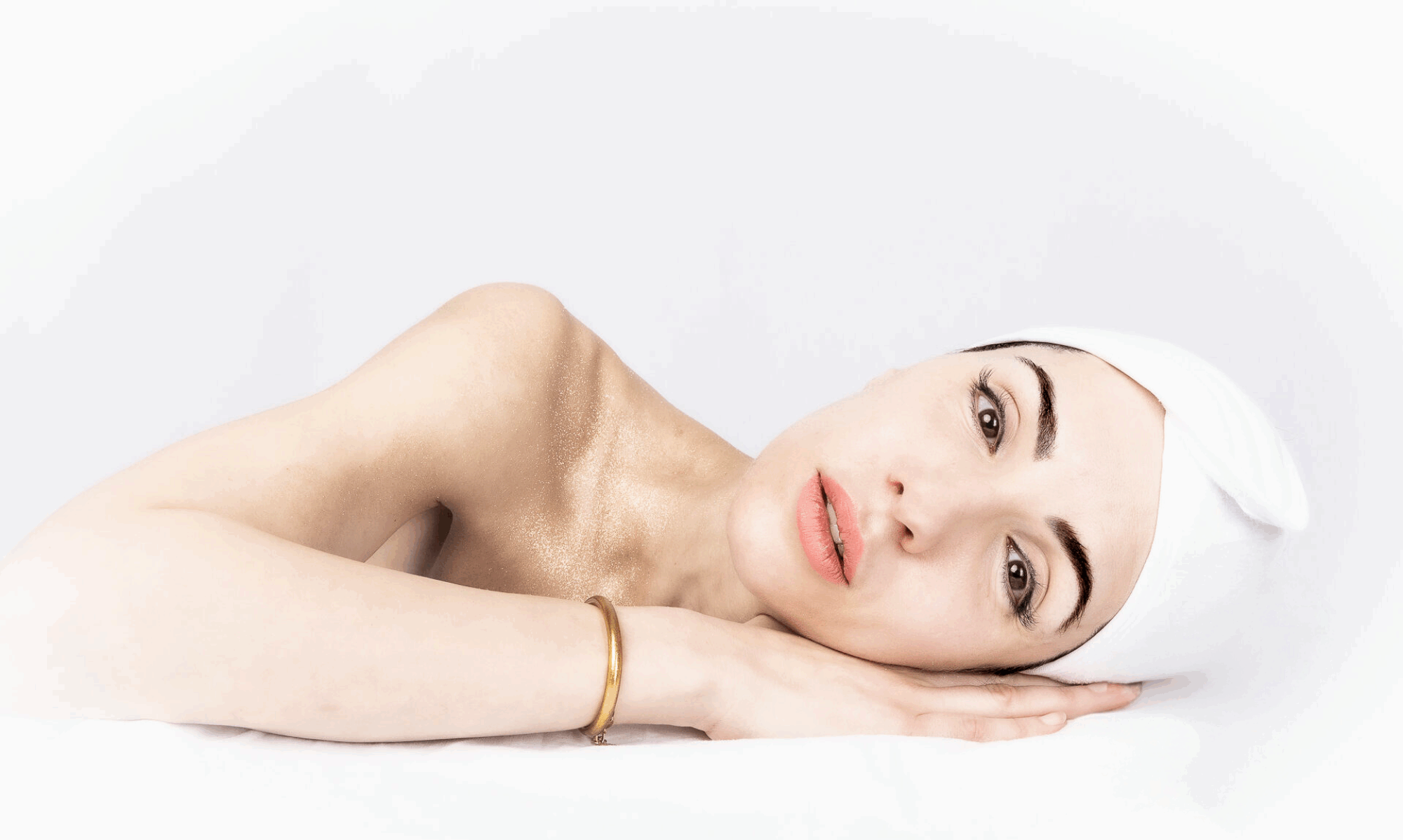


Every October, everything turns pink. We talk about screening, prevention, solidarity, and that matters. But behind this very feminine pink lies a reality we almost always forget: breast cancer affects men too. Rarely, but truly. So this year, I wanted to approach the subject from another angle: to understand why it happens, and how to care for your skin when the body goes through an ordeal. Because looking after yourself has no gender.
Pink October, for men too
Breast cancer remains the most common in women, and Pink October reminds us of the value of a simple habit: to observe yourself, to examine yourself, to see a doctor without delay at the slightest change. Caught early, it is most often treated very well.
What is less known is that it concerns men too. According to France's National Cancer Institute, they account for about 1% of cases, some 600 to 700 men each year in France. A small share, but a real one. And the diagnosis often comes too late, at a more advanced stage, simply because no one thinks of it: a man does not imagine that a lump under the nipple, a retraction or a discharge could concern him. They can. Watching over yourself has nothing distressing about it; it is a form of self-attention, just as one observes one's skin or sleep, and it belongs to everyone.
Why a man develops breast cancer
Men also have a little breast tissue, and that is where it all plays out. The vast majority of these cancers are hormone-sensitive: it is estrogen that fuels them. So anything that raises estrogen in a man increases the risk. Excess weight first, because fat converts part of the testosterone into estrogen. Liver disease, which disrupts the hormonal balance. Rarer situations, such as Klinefelter syndrome. Added to these are genetics, in particular the BRCA2 gene mutation and family history, age, and past radiotherapy to the chest.
And endocrine disruptors in all this? The question is legitimate: these substances, found in certain plastics, pesticides and cosmetics, precisely mimic estrogen. Several studies are exploring their link with breast cancer, with results that are still partial and inconsistent; nothing is established, especially in men. It is not proof, but it is one more reason to limit what we can: to prefer the simple, the clean, the unadorned. A principle I already apply to the skin.
Skin during cancer, gentleness above all
When a treatment begins, chemotherapy or radiotherapy, the skin changes. It becomes dry, fragile, reactive, sometimes sensitive where the rays pass. This is the time to lighten your routine and bring it back to a single idea: gentleness.
We simplify. A very gentle cleanser, fragrance-free, with lukewarm water. We set aside scrubs, brushes, anything that attacks an already weakened barrier. We moisturise generously, morning and evening, with rich, soothing creams, with ceramides, hyaluronic acid or colloidal oatmeal, and we protect from the sun without exception. Some laboratories have understood this well: La Roche-Posay has developed a range dedicated to skin during cancer, and Avène's repairing cream Cicalfate+ is also designed for skin under treatment, fragrance-free and highly tolerant.
And finally there is what creams cannot do: the comfort of touch. A face lightly brushed, a head gently massaged, a moment where you have nothing to prove. Perhaps that is what caring truly is: to accompany, more than to correct. And to remind everyone that they deserve gentleness.
At Mimisis, it is this gentleness that I seek to offer. The scalp massage in particular is a parenthesis I love dearly: slow movements over the scalp, the temples, the nape, that release tension and finally let the mind settle. A pure moment of relaxation, to feel like yourself again.
Book your Rituel sur mesure (1h30), for him or for her.
References: France's National Cancer Institute (cancer.fr); risk factors for male breast cancer (MSK, BCRF); reviews on endocrine disruptors and breast cancer (partial results); dermatological recommendations for skin under treatment (gentle fragrance-free cleansers, emollients).