
The return to routine sounds like a call to order. The pace picks up, the days fill, the nights grow shorter, and the body absorbs it all in silence. The face, though, keeps the ledger. Long before the set wrinkle, there is tension. Let us see how stress works, from the bone to the surface, and how to answer it.
Stress sculpts the face
Under pressure, the body releases cortisol. In the short term it is precious: it wakes us, mobilises energy, sharpens attention, sustains drive. It is when it settles in over time that it turns against us, and the face bears the trace, from the framework to the skin.
The bone first, because it is the foundation. We forget it, but a face rests on a bony architecture, and that architecture moves too. Over the years the facial skeleton resorbs: the orbits widen and the gaze hollows, the maxilla recedes, the jaw loses height while its angle opens. The cavities deepen, and everything covering them, muscle, fat, skin, finds itself less supported. Chronic stress does not help, for cortisol, in high doses and over time, slows bone formation.
The muscles next. Stress freezes expressions: we frown, we clench, we squint. Yet an expression line is born of repetition. With each contraction the muscle folds the skin in the same place; as long as the dermis is young and elastic, the fold fades; past the late twenties, collagen and elastin grow scarce, the skin no longer springs back, and the crease sets, visible even at rest. This is how the frown line forms, between the eyebrows. The jaw, for its part, often clenches without our knowing: the masseter tightens, sometimes thickens, and becomes a stubborn seat of tension. With age the lower face does not harden, it sags: the oval loosens, the jawline blurs.
The dermis, closer to the surface. Fibroblasts produce less collagen, elastin fragments, the supporting tissue thins. Stress adds its share through a quiet mechanism: cortisol raises blood sugar, and this excess sugar binds to the collagen fibres. This is glycation, which stiffens the fibres, makes them brittle, hardens the skin and dulls the complexion. More stress, more available sugar, more glycation.
Circulation, finally. With age and stress, microcirculation slows: blood supplies the skin less well, oxygen and nutrients arrive in a trickle, waste clears poorly. The complexion turns grey, dull, tired.
A word on collagen supplements, since the question comes up often. Recent studies show a modest but real benefit of hydrolysed collagen peptides on hydration and elasticity. It is no magic wand, but if you want to try, look for clinically studied collagen peptides, of low molecular weight, from 2.5 g a day, with vitamin C. The quality marker is the Peptan peptide. Two safe choices: Collaregen (hydrolysed collagen, with vitamin C) or Greenwhey (marine Peptan hydrolysed to 2000 daltons, hence well absorbed). As a support to good sleep and well-treated skin, never as a replacement.
Sleep, the treatment we neglect
The night is not a pause, it is a workshop. It is in deep sleep that the skin repairs itself: cells renew, collagen is synthesised, cortisol finally recedes. Cut the night short and the whole mechanism derails: cortisol that stays high, aborted repair, a leaden complexion, hollowed dark circles, features puffy on waking. Science has measured it. In a landmark study1, faces photographed after sleep deprivation were judged, blind, more tired, less healthy and less attractive than the same faces rested. "Beauty sleep" is not an old wives' tale: it is a measured fact. Sleep remains the first treatment, and the only free one.
The tension we do not feel
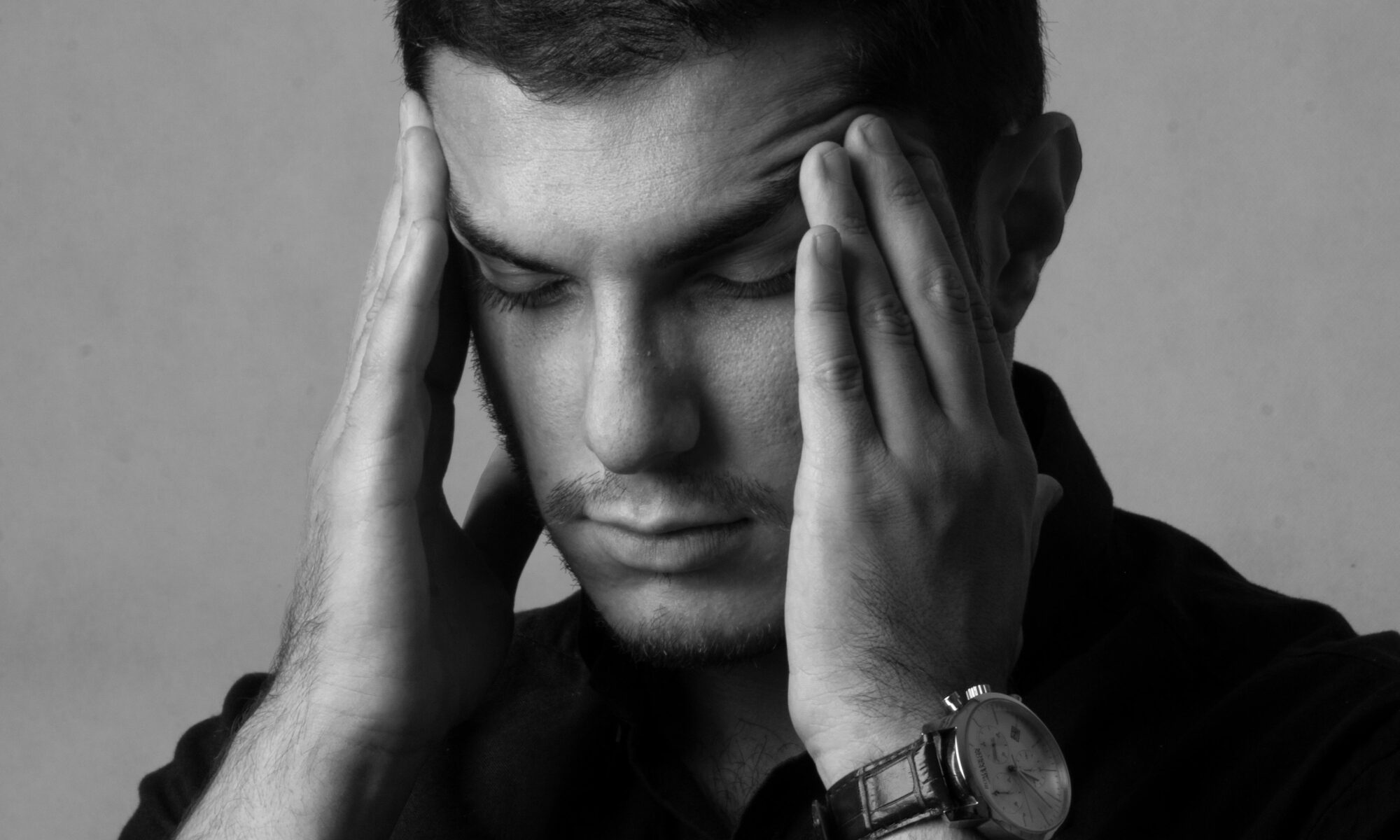
Here is the paradox of the face. A knotted shoulder, a stiff back, a heavy leg: the body warns, the pain rises, we know where it hurts. The face, though, stays silent. We do not know that the jaw is locked, that the temples are hard, that the brow never quite lets go, until a hand reveals it. It is often during the treatment, and even more after, that the truth surfaces: "I did not know I was so tense". And this tension is sometimes so deeply set that it resists, that it rises again under the fingers, so far has it lodged.
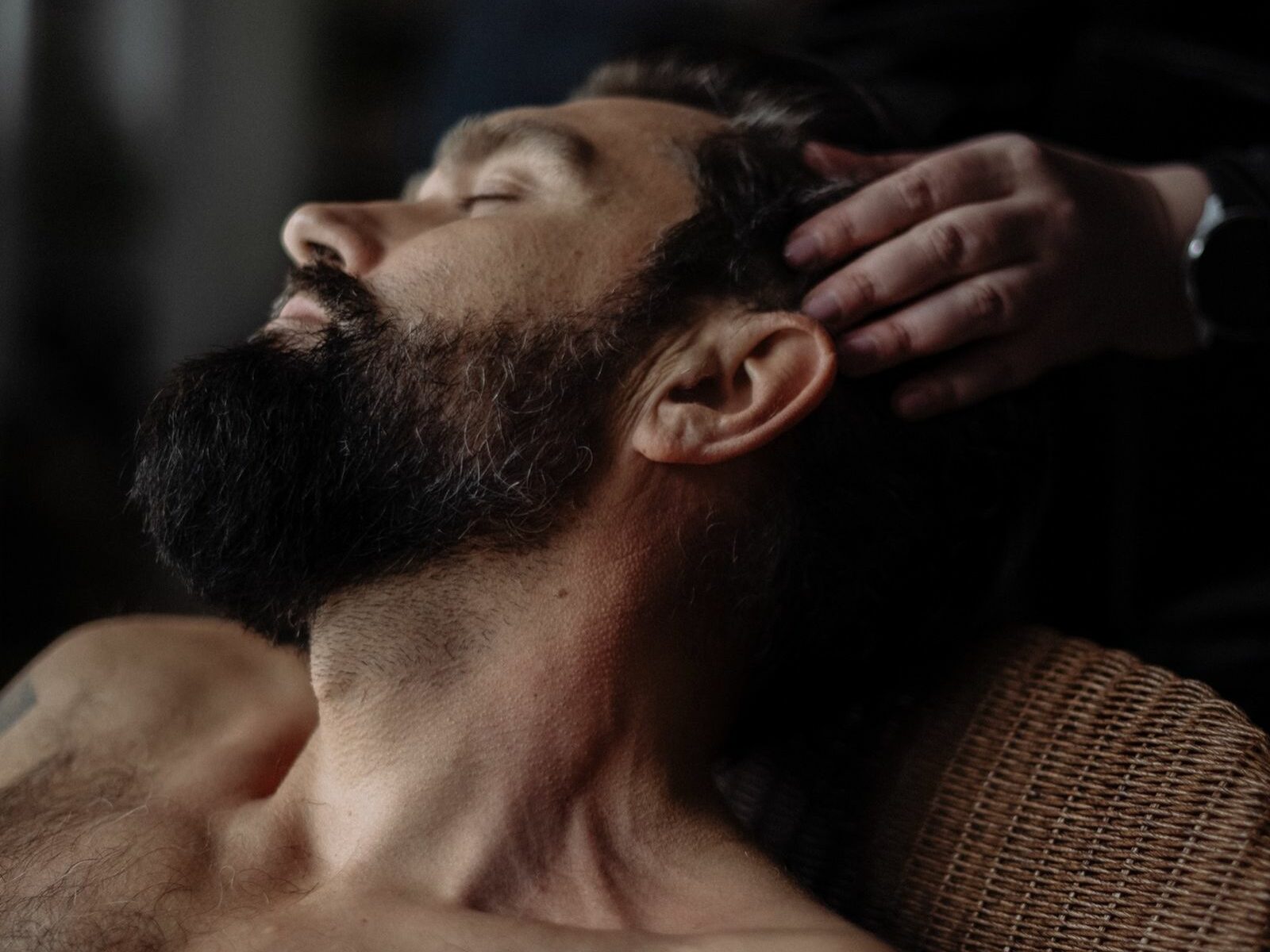
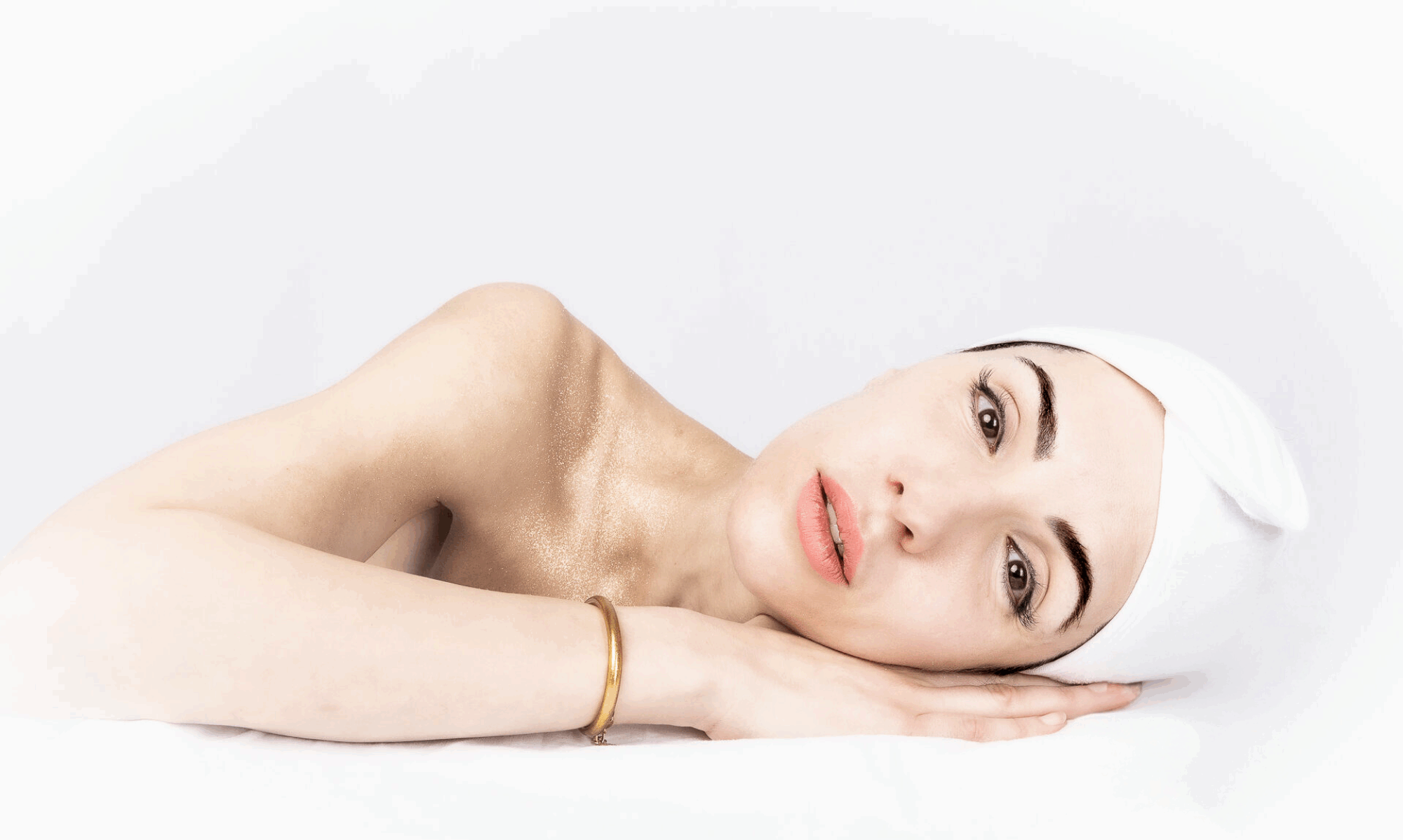
In the treatment room, I go where the fingers stop. Through cranial massage and intra-oral work, I loosen the jaw from within, I calm the nervous system, I release what stress has knotted in the skull, the neck, around the eyes. You leave with the face relaxed, open, rested, often surprised to have carried so much tension without even noticing. Book Récupération for men, or La Parenthèse for women, and give your face the release it dares not ask for.
1. Axelsson J. et al., "Beauty sleep: experimental study on the perceived health and attractiveness of sleep-deprived people", British Medical Journal, 2010.