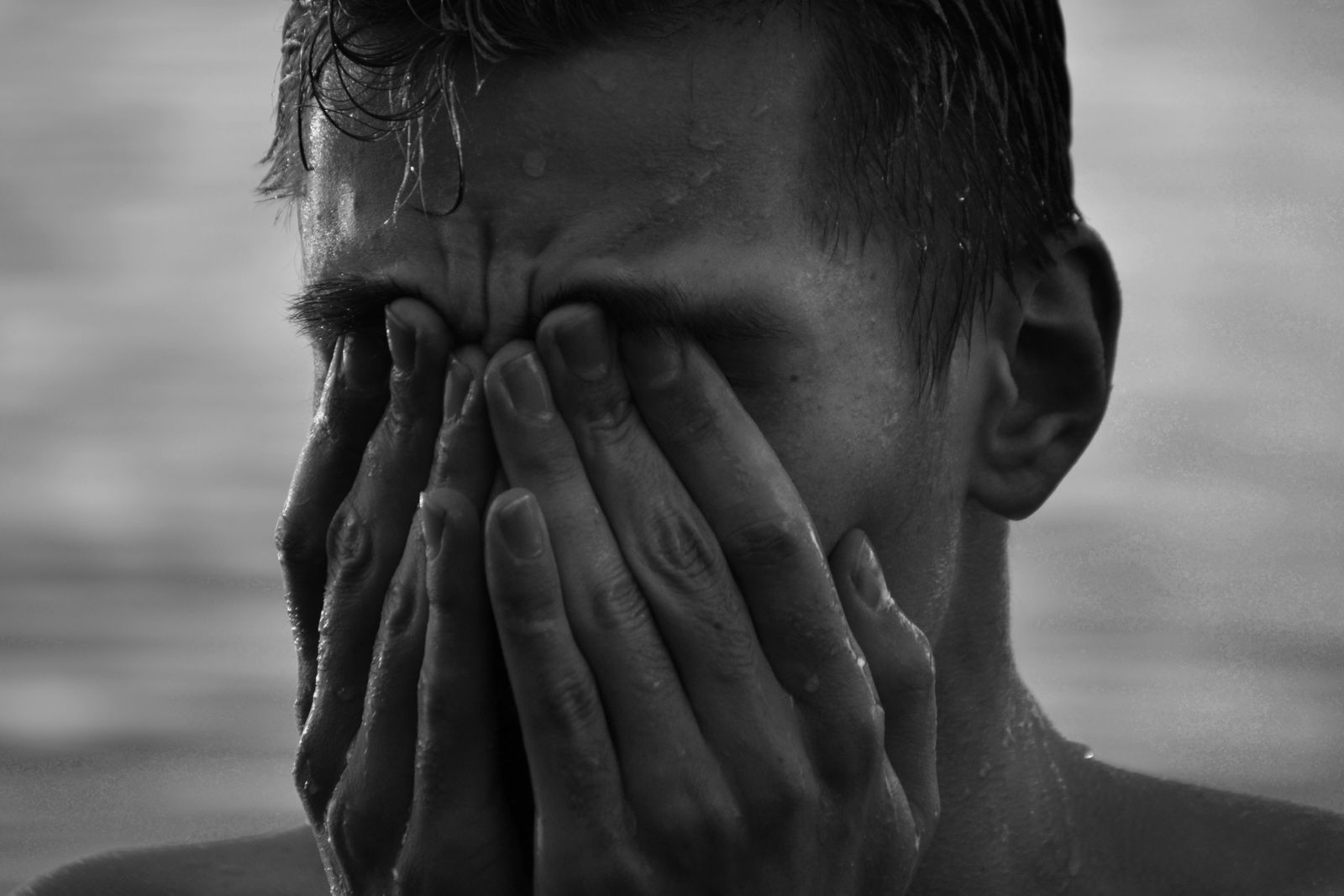


Recovery mode: repair, nourish, de-puff

Homme avec une planche de surf sur une plage ensoleillée
Recovery after the beach and the gym

Beach, sport, evenings out: summer is an active season, and the skin takes the hit. Salt, perspiration, sun, a few too many drinks, and the face soon shows it. Three ways to recover: repairing the surface, nourishing from within, and easing the puffiness from the features.

1. Repairing after the beach and the gym

The combination of sun, salt, sweat and towel dehydrates the skin and weakens its barrier, which brings tightness, redness and a dull complexion the next day. The instinct should not be to strip the skin, but to repair it quickly. On your return, rinse with cool water, then repair. Panthenol soothes and rebuilds the barrier, which is the whole point of the Cicaplast Baume B5 from La Roche-Posay. Niacinamide, for its part, strengthens that same barrier and calms redness, and you will find it concentrated in the Niacinamide 10% + Zinc serum from The Ordinary. To rehydrate and refresh after the sun, nothing beats a pure aloe vera gel, such as the Aloe Vera 92% from Nature Republic. In the morning, finally, one or two drops of vitamin C revive radiance and neutralise the sun's damage: the benchmark remains the C E Ferulic from SkinCeuticals, or The Ordinary Vitamin C for a gentler budget. One golden rule above all: you never exfoliate skin that is already stressed, you wait until it has calmed.

2. Kefir and kombucha: summer in a glass

Fermented drinks support the gut microbiome, that second brain which converses with the skin and to which we will return this winter. Put plainly, what happens in the gut is often written on the face. Kefir and kombucha make excellent substitutes for sodas when you are out in the sun, provided you choose well. The honest caveat is that many shop-bought kombuchas are very sweet. The right way to read a label is to aim for less than two grams of sugar per hundred millilitres. For kombucha, two names to keep in mind: Remedy, which contains no sugar at all, and the small, lightly sweetened artisanal brands such as Karma Kombucha. For kefir, favour a plain, unflavoured one, bearing in mind that water kefir is lighter than the milk kind, and steer clear of the fruity versions loaded with sugar.

3. Lymphatic drainage: easing the puffiness

Heat, salt, alcohol and short nights: summer tends to swell the face, leaving heavier features, a tired gaze and a less defined jaw on waking. This is fluid retention, and it can be worked on. Lymphatic drainage, through precise manual massage or with a gua sha, revives the circulation, clears the excess water and redraws the contours. At home, give yourself a few minutes of slow movements, from the centre of the face towards the ears and then the neck. In the studio, the result is immediate and visible: a sharper jaw, an open gaze, a revived complexion, ideal before an occasion that matters.

Recovery is part of performance. In sixty minutes, a protocol of drainage and repair erases the fatigue of summer: redrawn features, a rested gaze.
→ Book your ritual.


The beard: what a well-groomed man should know

Homme barbu à la coiffure soignée
The beard: what a well-groomed man should know

A beard says a great deal about a man. Worn well, it structures the face and sharpens the whole look; left neglected, it ages and tires the features. And beneath the hair lies a skin that is almost always forgotten. Here are the essentials, from the sun to the silhouette.

Does it really protect against the sun?

Yes, in part. Measurements from the University of Queensland show that a beard blocks fifty to ninety-five percent of UV rays*, depending on its thickness, its length and the angle of the sun. The effect is real but uneven: the exposed areas, from the cheekbones to the nose and on to the forehead and the area around the eyes, remain unprotected, and a thin beard lets the rays through. On the uncovered skin, then, you apply a facial SPF, like the men's options we covered in our SPF issue. And to protect the beard and the hair from the sun, a hair mist such as the René Furterer Fluide d'Été Protecteur SPF50 does the job, in a light spray, never a greasy cream on the hair. The beard helps, but it does not replace protection.

Caring for it day to day

A fine beard is washed and nourished, just like the hair. You cleanse it with a beard shampoo, since shower gel dries it out, two to three times a week. You nourish it with a beard oil or balm, which softens the hair, calms the itching and tames the unruly ones, like the beard oil from Horace, natural and affordable. You then keep it in line with a boar-bristle brush, such as those from Plisson 1808, a French house, handmade and shipped within France. There remains the point everyone forgets: the skin underneath. Deprived of care, it itches, flakes and produces that notorious beard dandruff. The fix is to cleanse and hydrate it like the rest of the face, and a good beard oil, rich in jojoba and argan, in fact nourishes the hair as much as the skin. It is the skin that makes a beard healthy.

The shape: the outline is everything

A full beard that is poorly defined looks untidy. Everything comes down to two lines: that of the neck, at the height of the Adam's apple, neither too high nor too low, and that of the cheeks, clean, following the natural growth. You maintain them every two or three days, and for the first shaping, nothing beats a good barber. In Paris, there is no shortage of high-end names, from Le Cercle Delacre to La Barbière de Paris and Gentlemen 1919. One visit sets the line, which you then keep up at home.

Filling the gaps: transplant and dermopigmentation

For a sparse or uneven beard, two medical options exist. The beard transplant, by the FUE technique, implants real hairs to add lasting density, with specialists such as Dr Ralph Abbou or the Centre Racine Carrée. Dermopigmentation, for its part, recreates the look of density without surgery, through micro-pigmentation, offered notably at CMCC Paris. These are serious procedures, to be weighed carefully and entrusted to expert hands: you do your research, you compare, and you do not rush.

A beard is seen, while the skin beneath is neglected. In sixty minutes, I care for the skin of the whole face, beard included: clear, soothed, free of itching and redness.
→ Book your ritual.

* Parisi AV et al., "Dosimetric investigation of the solar erythemal UV radiation protection provided by beards and moustaches", Radiation Protection Dosimetry, 2012.

Coffee, sun and sweat: summer under control

Homme tenant une tasse de café, lumière chaude derrière une vitre
Coffee, sun and sweat: keeping a clear complexion in summer

Summer does not forgive carelessness. A coffee gulped down at the corner of a desk, the sun, the heat that leaves the skin shining: three forces that mark the face if you let them. Here is how to keep the upper hand.

1. Coffee and skin: friend or foe?

Good news to begin with: coffee is not your skin's enemy. It is even rich in antioxidants. The problem does not lie in the coffee itself, but in everything we add around it. There are three traps, in truth: sugar, which dulls the complexion, excess, since caffeine is a diuretic and dehydrates, and timing, when a coffee stands in for a real glass of water. Using it well comes down to a few simple rules: one to three coffees a day, with little or no sugar, always alongside water, and preferably in the morning, since the skin repairs itself at night and it would be a shame to cut your sleep short. Fancy a change? Matcha offers antioxidants with a steadier energy, without the spike or the crash.

2. Sun protection: the number one mistake men make

If you remember only one thing, let it be this: sun protection is the most rewarding step in your entire routine. The sun is responsible for the great majority of visible ageing, whether wrinkles, dark spots, sagging or a dull complexion. And not in ten years' time, but now, with every exposure. The mistake men make is to believe that SPF is for the beach. Yet UV rays pass through clouds and glass, so the commute, the lunch outdoors and the coffee in the sun all count. The right reflex is simple: an SPF 30 to 50 every morning, summer and winter alike. Look for a fluid, matte and non-greasy texture. Three safe choices for this: La Roche-Posay Anthelios (an invisible fluid), Beauty of Joseon Relief Sun (a natural finish, with no white cast) and Biotherm Homme UV Defense. Fifteen seconds to apply, and it is the best anti-ageing investment there is, the one no one ever regrets.

3. Sweat: a clear complexion all day long

Heat makes you sweat: the skin shines, the pores become visible, and the complexion turns dull by the middle of the day. There is no need for a complicated routine, only the right steps at the right moment. In the morning: a gentle cleanser, a light moisturiser, SPF. In the middle of the day, after exertion or a journey, a pass of facial mist works wonders (see last week), or failing that a rinse with cool water, patted rather than rubbed. In the evening, you cleanse to remove sweat, sebum and pollution, and this is not up for negotiation. Three minutes in the morning, three at night: that is all it takes to move through summer with a clear face.

The sun and fatigue mark the face in silence. In sixty minutes, a precision protocol erases the traces of summer and reveals a clear, rested complexion.
→ Book your ritual.

Heatwave: three reflexes for a clear, rested face

Homme se rafraîchissant le visage à l eau
Keeping a clear face through a heatwave

When the thermometer climbs, your skin stands on the front line. Between perspiration, sunshine and air that turns dry then air-conditioned, a few hours are enough for the complexion to grow muddy, for the skin to feel tight or to shine, and for the face to betray its fatigue. The good news is that three simple reflexes are enough to keep your face clear and rested, even at the height of summer.

1. Why your skin feels tight in the heat

It seems counterintuitive, yet the hotter it gets, the more the skin dehydrates at its surface. Perspiration draws out water, while the sun and the surrounding air wear down the skin barrier, that precious layer which holds moisture in place. The result shows almost at once: skin that feels tight, that sometimes shines because it compensates with sebum, and a dull complexion. Even oily skin can be starved of water. The classic mistake is to strip it back. Multiplying harsh cleansers or alcohol-based products only weakens the barrier further. The right reflex is the very opposite: to lighten the routine. A gentle cleanser morning and evening, lightweight hydration, a gel or a fluid rather than a heavy cream, and above all, sun protection. It is the step most men overlook, even though it remains the most decisive of all against dullness and ageing. In summer, two or three good products will always serve you better than a crowded shelf.

2. Beyond water: which drinks truly hydrate, without the sugar

Drinking water remains the foundation. Yet when you perspire, you also lose minerals such as sodium and potassium, and water alone is not always enough. This is where electrolytes come in, with no gadget required: a pinch of salt and a squeeze of lemon in your glass already do the work.

What to avoid at all costs: sodas and energy drinks. An excess of sugar triggers glycation, the process that dulls the complexion and hastens sagging. Be wary, too, of the wellness marketing. Many of the detox waters sold as miraculous are, at heart, little more than sugar in disguise, so take the time to read the labels. The good choices come down to a few names: water enriched with electrolytes, coconut water for its potassium, and unsweetened iced green tea for its antioxidants. Coffee and alcohol, for their part, are dehydrating. A morning coffee is perfectly fine, as long as you pair it with a glass of water. Your skin drinks, in the end, whatever you drink.

3. The anti-heat gesture: the hypochlorous acid mist

One product alone truly earns its place in your summer bag: a hypochlorous acid mist. Behind this technical name lies a molecule that your body produces quite naturally. Sprayed as a fine mist, it cools, soothes redness and purifies the skin. It becomes ideal after perspiration, sport or shaving, those moments when blemishes and razor burn lie in wait. Among the brands, the Tower 28 SOS Daily Rescue sets the standard, the hypochlorous acid spray by Mario Badescu proves more affordable, and the Purito Hypochlorous Acid Rescue Spray offers a clean alternative.

The habit is simple: keep it cool and spray after exertion or in the middle of the day. Five seconds are enough, and the skin turns clear, calm and ready again. It is the kind of discreet detail that makes all the difference over time.

Heat puts your skin to the test. In sixty minutes, a precision protocol restores its freshness, clarity and glow, just before a meeting, a dinner or a moment that matters.
→ Book your ritual.

Scalp massage: switching off, for real

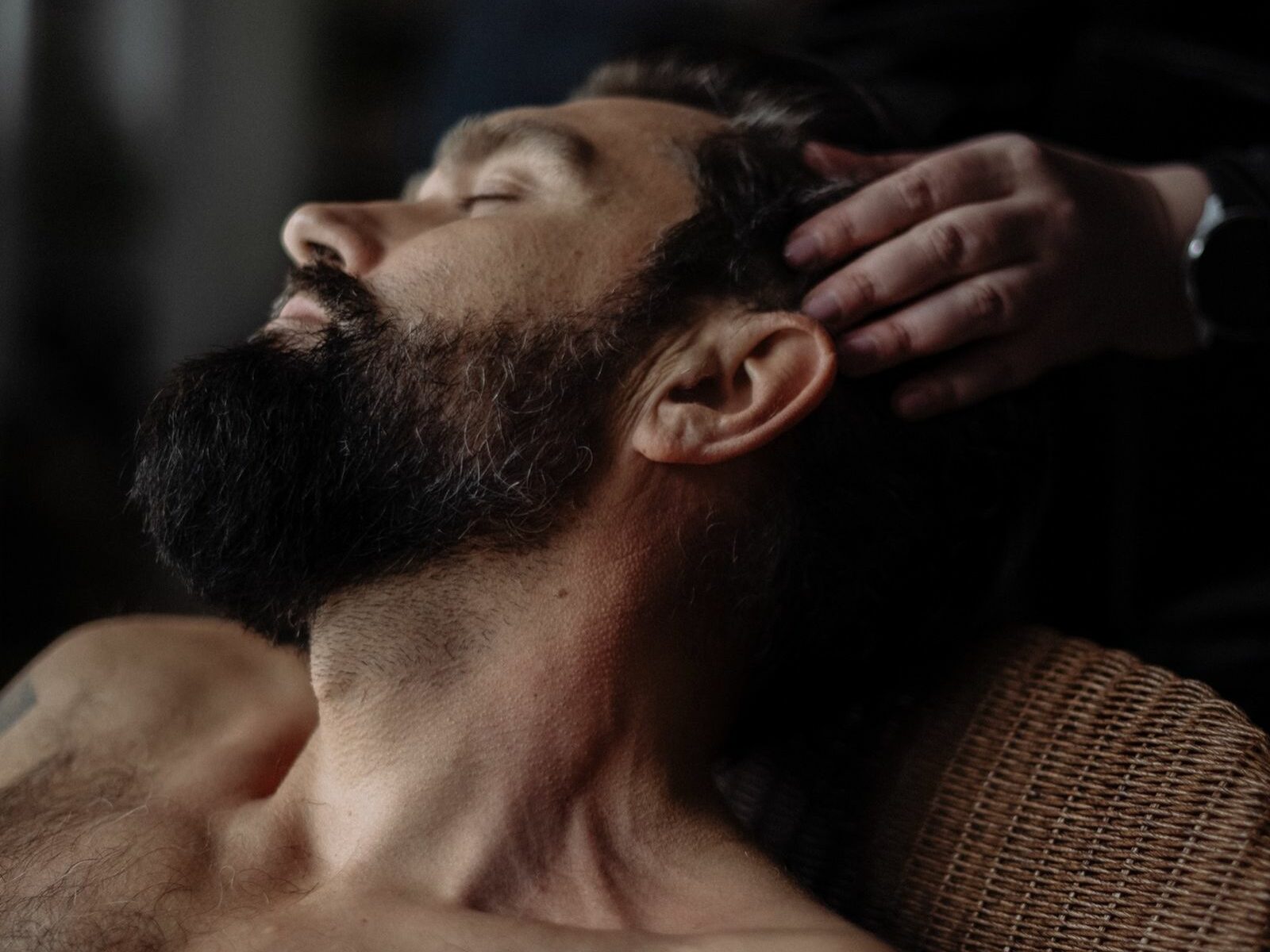
Massage crânien relaxant, mains sur le cuir chevelu
Scalp massage to switch off and revive the complexion

We massage the face, the shoulders, the back. The scalp, almost never. And yet the scalp is one of the most densely innervated areas of the body, in direct conversation with the brain. That is what makes a scalp massage so powerful, on stress as much as on the complexion. Here is what truly happens beneath the fingers.

Why the scalp, of all places

Like the face, the scalp is studded with nerve endings, among the densest in the body. They connect to the brain through major nerves: the trigeminal at the front, the occipital nerves at the back. When this area is massaged, these sensors send an almost immediate signal to the brain, which shifts into a state of release as the parasympathetic nervous system takes over. To this you must add the small muscles that contract endlessly without our noticing: we frown, we clench the jaw, we knit the brow in front of a screen. These tensions settle in, pull at the features and lend that closed, weary look. The massage undoes the knot and restores movement where everything had stiffened. It is this double action, both nervous and muscular, that explains why a few minutes are enough to transform the way you feel.

What the science says

You cannot fake a massage, which makes a double-blind trial impossible. Researchers therefore measure objective markers, and they all point the same way. Massage lowers cortisol, the stress hormone, along with blood pressure, and it increases local blood flow, which re-oxygenates the skin and revives the complexion. A Japanese study even measured that a daily scalp massage thickens the hair over a few months*. This renewed microcirculation also nourishes the follicle, which makes it the ideal moment to apply a targeted treatment. A peptide hair serum, such as the Anti-Hair-Loss Peptides and Pea Extract Serum from Aroma-Zone, makes the most of that circulation to penetrate more deeply just before the massage. And to massage effortlessly every day, the small round silicone scalp brushes do the job beautifully, in the shower or on dry hair, in only a few minutes. You will find excellent ones at Cava Barber or Trendy Barber, two French men's brands.

What it actually does

Beyond the figures lies the feeling, and this is where the scalp massage takes you by surprise. Many of my clients leave telling me the very same thing: a sense of complete disconnection, almost as though they were floating. The mind goes on pause, the body grows heavy, and you lose a little of your sense of time. There is nothing esoteric about it: it is the nervous system tipping into a state of rest, the one we almost never reach in an ordinary day. You leave with a light head and open features.

A head under pressure shows on the face. Scalp massage sits at the heart of my Recovery: sixty minutes to truly switch off, release the tension and revive the complexion.
→ Book your ritual.

* Koyama T. et al., "Standardized scalp massage results in increased hair thickness by inducing stretching forces to dermal papilla cells", Eplasty, 2016.

Heatwave: should you drink iced, hot, or lukewarm?

Théière marocaine au soleil, vapeur

When the thermometer climbs past thirty-five degrees, the instinct is to reach for an ice-cold drink. A poor choice? Not quite so simple. Here is a quick look, with the science to back it up.

1. Iced drinks: a false friend

A very cold drink is refreshing in the moment, there is no denying it. Yet there is a catch: on receiving that signal of cold, the body cuts down its perspiration. And it is precisely sweat, as it evaporates, that truly cools you down. The result is immediate relief, but body heat that is released less efficiently over time. Not to mention the thermal shock, which can be hard on the digestion.

2. Hot drinks: a paradox that holds up

It seems counterintuitive, yet the work of the thermoregulation researcher Ollie Jay, at the University of Sydney*, has shown it: a hot drink can actually help you cool down. By raising your temperature slightly, it makes you sweat a little more, and it is that evaporation which brings the body's temperature down. A word on the conditions, though: it only works if the sweat can evaporate, which means dry air and uncovered skin. In full humidity, or buttoned into a suit, all you gain is the heat. The mint tea of hot countries, then, is no accident.

3. The right compromise: cool, not iced

Between the two extremes, practical sense wins out. Health authorities recommend neither: their message is to hydrate regularly, with cool rather than iced water, and to steer clear of alcohol and excess sugar. Temperate water has one concrete advantage, namely that it is better tolerated, so you drink more of it and hydrate more effectively. And what of the skin in all this? Good internal hydration means a less dull complexion and a barrier that holds firm. In a heatwave, your face is every bit as thirsty as you are.

Heat puts your skin to the test. In sixty minutes, a ritual of freshness and drainage for a clear, rested complexion, even at the height of summer.
→ Book your ritual.

* Bain AR, Lesperance NC, Jay O., "Body heat storage during physical activity is lower with hot fluid ingestion under conditions that permit full sweat evaporation", Acta Physiologica, 2012.

Book now