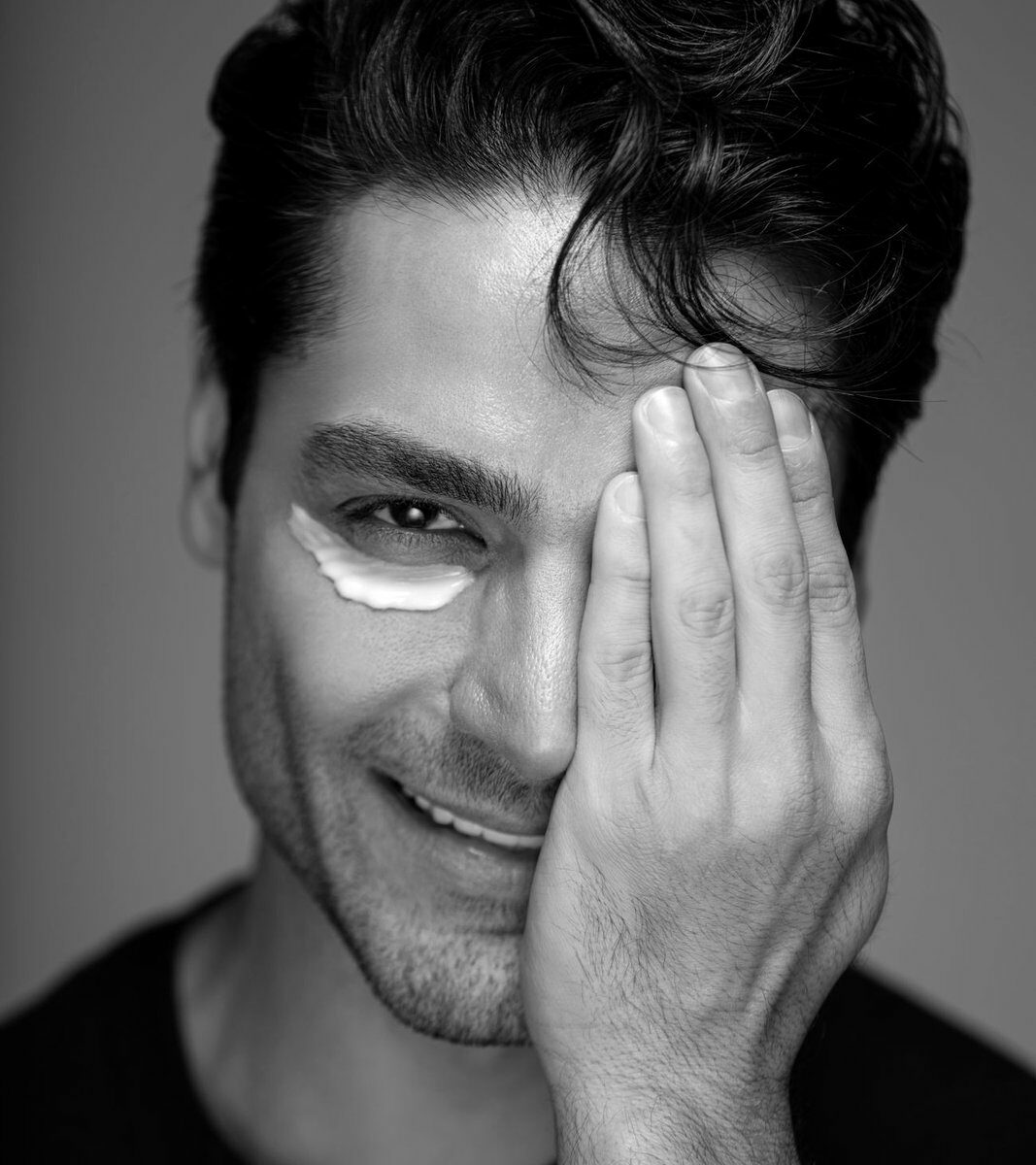
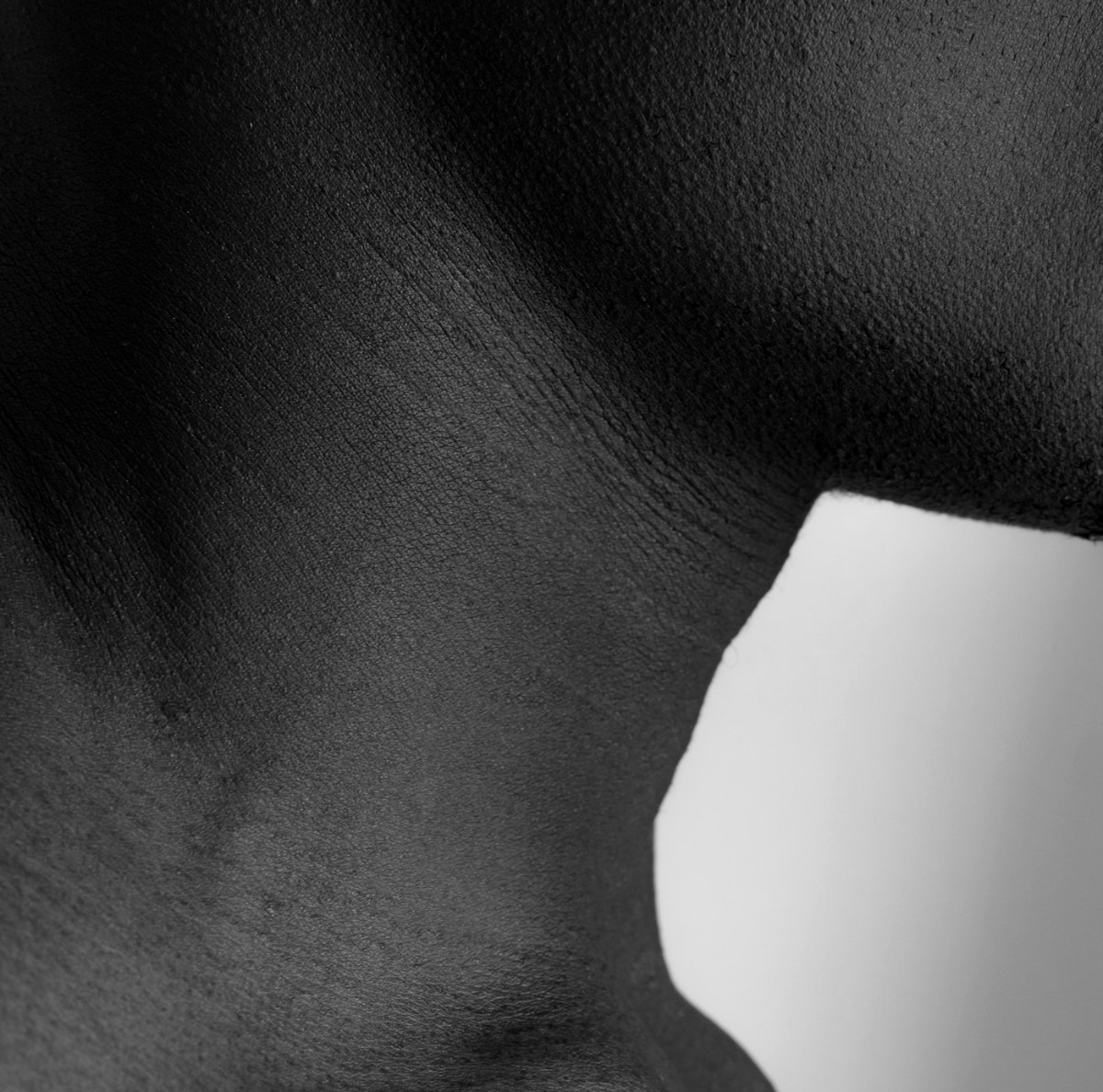
There's a contrast that strikes me almost every day in the studio: cared-for, well-kept faces, sitting on a neck left behind, more marked, sometimes of an entirely different age. If the neck often ages before the face, it's because two things add up: its skin is more fragile to begin with, and it receives far less care than the face. I wanted to tell you about it: why this area gets a head start, how to really look after it, and the evening gesture I recommend.
Why the neck ages first
The skin of the neck doesn't have the same defences as the face. It's thinner, poor in sebaceous and sweat glands, less cushioned with fat, less supported by collagen: it holds less water, dries out and slackens sooner. What a well-nourished cheek still gets away with shows quickly on a neck left to itself.
Added to this fragility is the sun. The neck takes it all year round, collar open and nape bare, and almost never any protection: it's one of the most light-exposed and least defended areas of the body. This repeated exposure degrades collagen and elastin, and gradually brings on poikiloderma of Civatte, those reddish mottlings mixed with tiny vessels on the sides of the neck, curiously sparing the shaded area under the chin, a pattern so characteristic it has long had a name in dermatology.1
Finally, the neck works without rest. It folds with every movement of the head, and all the more since we spend our days with the chin bent over a screen. The skin creases always in the same place, and the horizontal lines, what we sometimes call the necklace of Venus, end up staying. Underneath, the platysma, that broad flat muscle lining the neck from jaw to collarbones, is a muscle that pulls downward, that's its very nature. As long as the skin stays firm, the balance holds; but as it slackens, that downward pull takes over: the jawline blurs, vertical cords appear on the neck, and the chin stands out less clearly. Nothing dramatic, but the neck tells, in its own way, a story the face still keeps quiet.
Looking after it, properly
The neck catches up fast, because you're often starting from nothing. In the studio, I always carry my facial care down to the neck: cleanser, moisturiser, and above all sun protection. A moisturiser that already includes an SPF settles both in one gesture, like the Hydratant Visage Matifiant SPF30 by Horace, a Parisian brand made for men. On an area this exposed, sunscreen is what pays off most: a major Australian trial, run over four and a half years, measured close to a quarter fewer signs of ageing in those who applied it every day.2
Then, two actives are worth a place. In the morning, a vitamin C helps the skin withstand light and pollution; in the evening, an anti-ageing serum stimulates collagen and smooths the lines, gently, because the neck's skin is thin and easily irritated. I have a soft spot for the small Parisian houses that formulate cleanly, like Sainderma and its organic Anti-Ageing Serum for Men.
Then there's the hand, which is my craft. The neck holds the tension of the jaw and the nape; slow, upward moves relax it and boost microcirculation, and lymphatic drainage, from the jaw toward the collarbones, de-puffs a heavy neck. In the studio, I extend every treatment down to the neck and décolleté, from Kobido to drainage.
The evening gesture
At home, a minute is enough, in the evening, on clean skin. After the moisturiser or an oil, I lay both hands flat at the base of the neck and move up slowly, from the collarbones toward the jaw, in gentle presses: it wakes the circulation and releases the platysma. About ten times, never pulling the skin downward. A gua sha or a roller extend the gesture, always upward, flat, without forcing.
Posture counts too, and it costs nothing: the head straight, the screen at eye level rather than the chin dropped for hours, and sleeping rather on your back if the lines mark on one side. And in the morning, sun protection, even in winter, even under a collar.
This neck we save for last, I work it in the studio in the continuity of the face: Récupération for men, La Parenthèse for women. Book your ritual.
Frequently asked questions
Why does the neck age before the face?
Its skin is thinner, less supported and rarely protected from the sun. It slackens and marks sooner than the face.
Do you need a special neck cream?
Not necessarily. Extend your facial care down to the neck, insisting on sun protection. Regularity counts more than the bottle.
Is retinol suitable for the neck?
Yes, but gently. The neck's skin is thin and sensitive: start every other or every third night, on well-moisturised skin, and space it out if it stings.
Do screens really mark the neck?
A bent head folds the skin in the same spot, over and over. The direct link is still debated, but keeping the screen at eye level eases the nape and costs nothing.